
Menu
Website Design & Development
1837-1847
Foundations Before Formation
Cricket Takes Root in Sutton Coldfield
Foundations Before Formation, 1837-1847
Long before the formal establishment of Sutton Coldfield Cricket Club in 1847, cricket had already taken firm root in the town.
By at least 1837, the game was being played regularly on the open expanses of Rectory Park and Sutton Park. These early matches, informal in organisation yet consistent in spirit, formed part of the social rhythm of the community. Cricket was not merely recreation; it was a gathering point — a shared pastime that reflected the character of a growing town in the early Victorian age.
Central to this formative period was the influence of the Rev. W.K. Riland Bedford. His enthusiasm for the game, combined with a strong sense of duty to parish and community, provided the leadership necessary to sustain and shape these early efforts. Though formal records from this era are scarce, later recollections and historical research allow a picture to emerge of a game sustained by volunteerism, local pride, and quiet organisation.
This was an age before committees, subscriptions, or structured competition — yet it laid the essential foundations upon which the club would soon be built.
Rev. W.K. Riland Bedford was the fifth generation of his family to make their livelihood in Sutton Coldfield — and the ground the club plays on was their glebe land.
The Riland & The Bedford Family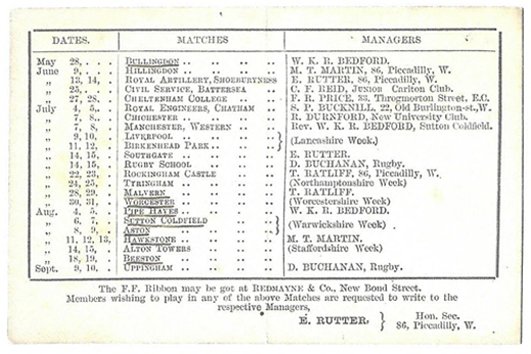
An early Sutton Coldfield fixture list, naming the season's matches and the managers responsible for raising each side
The Early Game in Sutton Coldfield
Cricket was being played in Rectory Park at least a decade before the club's formal foundation. Evidence preserved in later records, including a minute book entry of 1897 marking Bedford's sixty-year association with the club, confirms that organised play was already well established by 1837.
These early matches were simple in arrangement but regular in occurrence. Played on unfenced ground and shared with the wider parkland, the game relied on mutual understanding rather than formal rules of enclosure or ownership. Pitches were prepared by hand, often by the players themselves, and the boundaries of play were as much agreed as measured.
Despite these limitations, cricket flourished. It quickly became a defining feature of local leisure, drawing participants and spectators alike and embedding itself within the identity of Sutton Coldfield.
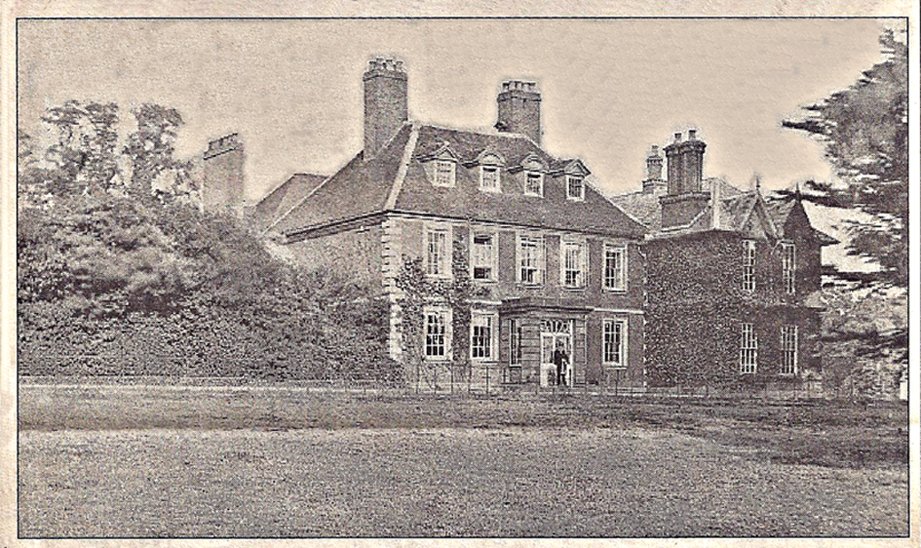
Sutton Rectory, from the plates of Rev. W.K.R. Bedford's book - the house that gave Rectory Park its name, with the cricket lawn in front of it. The plate carries no date.
Towards Formation: Cricket in the 1840s
By the early 1840s, cricket in Sutton Coldfield had begun to assume a more organised character. What had started as informal recreation was gradually evolving into something more structured and enduring.
Regular participation, the increasing involvement of local families, and the steady guidance of figures such as Rev. Bedford contributed to a growing sense that the game required permanence. Matches were no longer purely spontaneous; they reflected continuity, expectation, and community investment.
Though still lacking formal constitution, these years represent the crucial transition from casual play to organised club cricket. By the middle of the decade, the conditions were in place for the formal founding of Sutton Coldfield Cricket Club — an act that would give lasting identity to what had already become an established tradition.
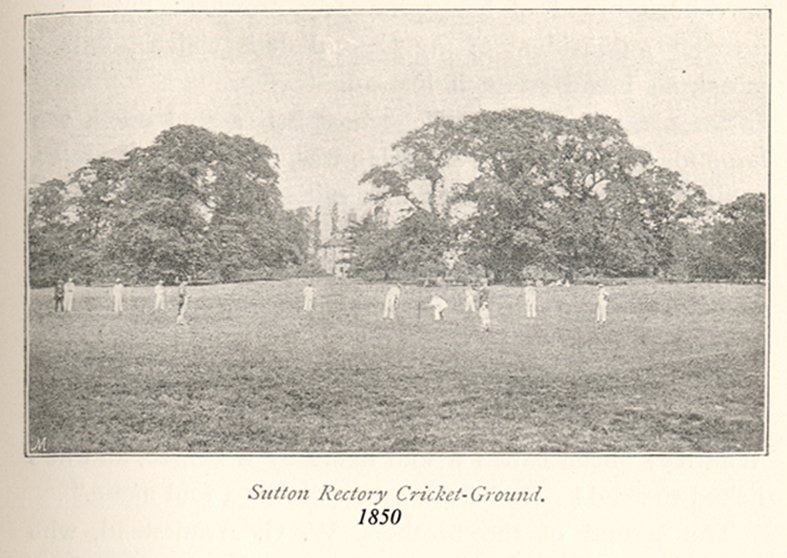
"Sutton Rectory Cricket-Ground. 1850" - a match in progress, the Rectory just visible through the trees at the centre. Three years after the club was formed, and the earliest known view of the ground it was founded on.
Rectory Road and the Early Landscape
In the mid-nineteenth century, the landscape surrounding Rectory Park was markedly different from that of today. Rectory Road existed only as a narrow country lane linking Boot Hill to the parish church, while Bedford Road — now a principal route — had yet to be constructed, its place taken by rough tracks known locally as Blackberry Lane or Bricky Lane.
Access to matches was dictated by the limitations of the time. Players and visitors travelled on foot or horseback, and hospitality formed an essential part of the cricketing experience. Visiting sides were often accommodated at nearby farms, including School Farm, where overnight stays were common.
To support these gatherings, a modest structure — remembered as the 'Tin Hut' near the Boot Inn — was erected. Though simple, it reflects the practical efforts made to sustain the game during its earliest years.
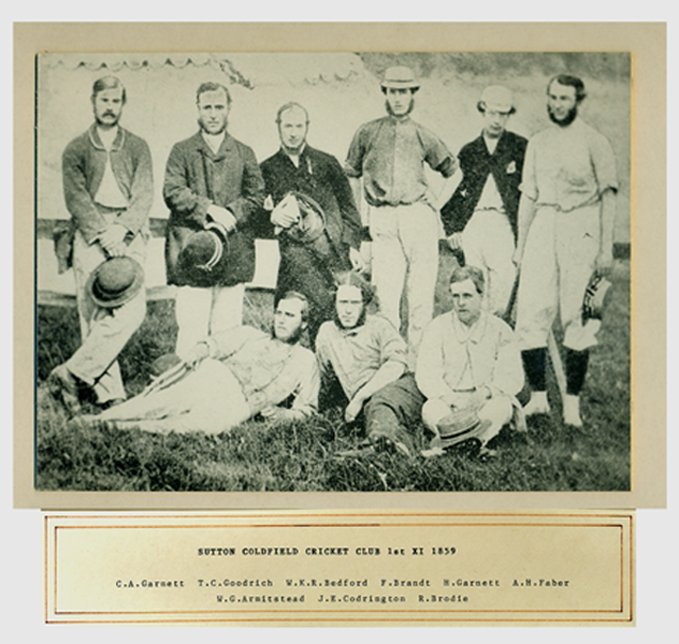
Members of Sutton Coldfield CC and Free Foresters, 1863
The Bedford Family and Rectory Park
The role of the Bedford family in these formative years cannot be overstated. The Rev. W.K. Riland Bedford, together with his five sons, was instrumental in transforming Rectory Park into a viable cricketing ground. Assisted by his gardener, he oversaw the preparation of pitches and the general maintenance of the playing area, ensuring that the game could be played with regularity and purpose.
Beyond cricket, Bedford's influence extended to the shaping of the landscape itself. His planting of trees — including a notable avenue of elms — enhanced both the beauty and character of the park, reinforcing its role as a focal point for community life.
The Rectory served not only as his residence, but as the informal headquarters of cricket in Sutton Coldfield — a place where organisation, hospitality, and leadership converged.
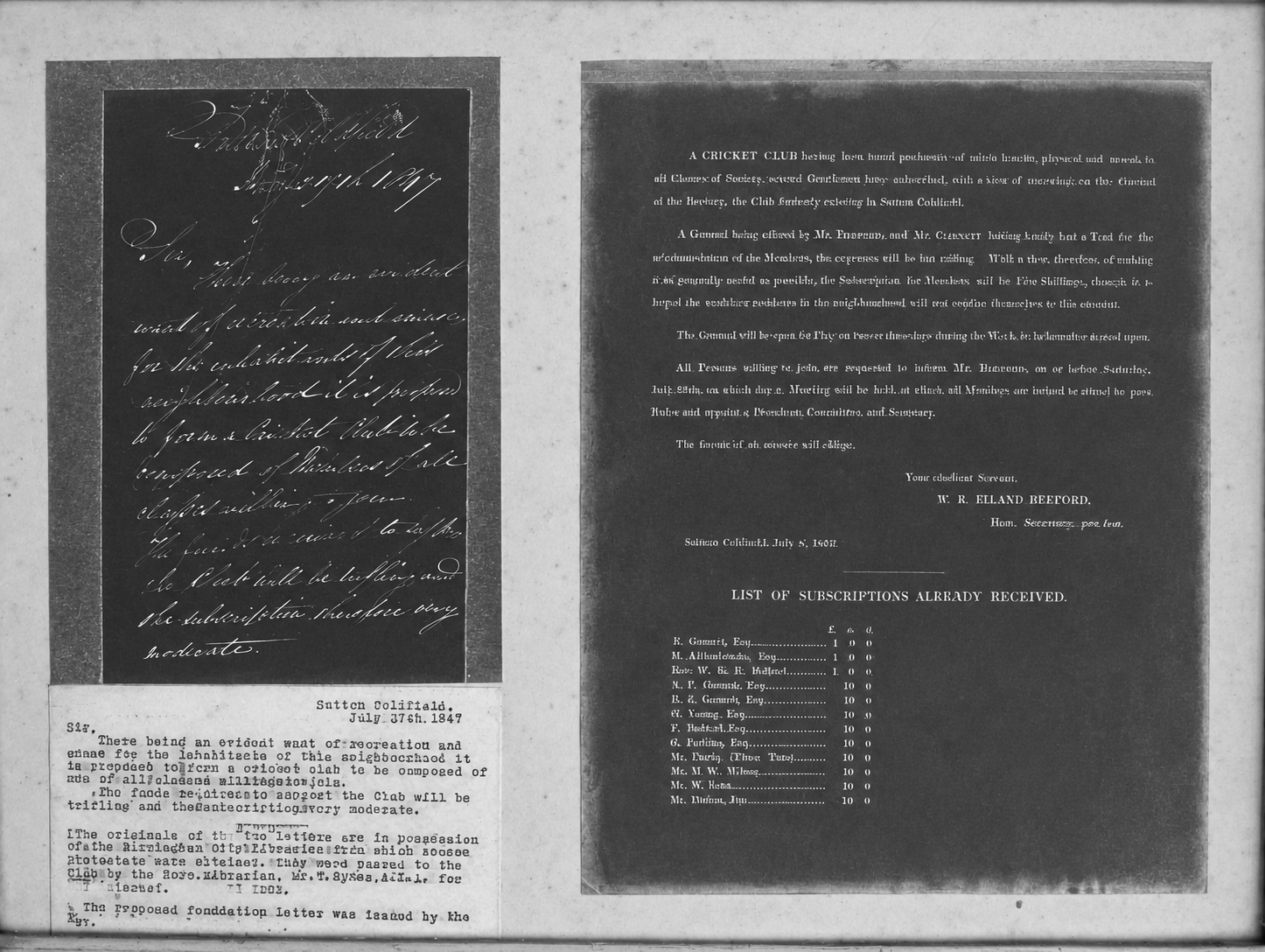
The notice of 17th July 1847 in which the Rector proposed a cricket club, mounted with the printed circular that followed it. The originals are held by Birmingham City Libraries, and these photostats were given to the club by the Hon. Librarian, Mr T. Sykes.
Preserving the Early History
The story of these early years survives not through continuous record, but through later dedication to preservation. It was not until 1937, on the eve of the club's centenary, that Frank S. Styles undertook the first serious effort to reconstruct its early history. Working from fragmentary evidence, recollection, and surviving documentation, he established the foundation upon which all subsequent histories would rely.
His work was later extended by Norman Sharp and, in the modern era, by Peter Bell, whose efforts to compile and digitise records ensured that the club's origins would not be lost to time.
The absence of early minute books remains a reminder of how easily history can fade — and how vital such preservation has been in maintaining the continuity of the club's story.
Two of those documents survive as photostats. The first, in the Rector's own hand and dated 17th July 1847, reads: "There being an evident want of recreation and amusement for the inhabitants of this neighbourhood it is proposed to form a cricket club to be composed of members of all classes willing to join. The funds required to support the Club will be trifling and the subscription therefore very moderate." The second is the printed circular that followed, signed by W.K. Riland Bedford as Hon. Secretary pro tem, calling a meeting for Saturday 24th July at which rules would be passed and a President, Committee and Secretary appointed - and listing the twelve subscriptions already received. Three gave a pound apiece, the Rector among them, and nine gave ten shillings; the Garnett name appears three times, and the licensee of the Three Tuns is among them. The originals belong to Birmingham City Libraries.
Key Moments
1837
Cricket Played in Rectory Park
Earliest recorded evidence of organised cricket in Sutton Coldfield
Early 1840s
Game Becomes Regularised
Cricket transitions from informal play to a more structured and sustained activity
1847
Club Officially Founded
Sutton Coldfield Cricket Club formally established under Rev. W.K. Riland Bedford
1856
Free Foresters Cricket Club Formed
Founded by Bedford, reflecting his wider influence on the game
1937
Early History Compiled
Frank S. Styles reconstructs the club's origins ahead of the centenary
"From such modest beginnings are enduring traditions formed."
Jump to New Decade
Foundations Before Formation
1837-1847
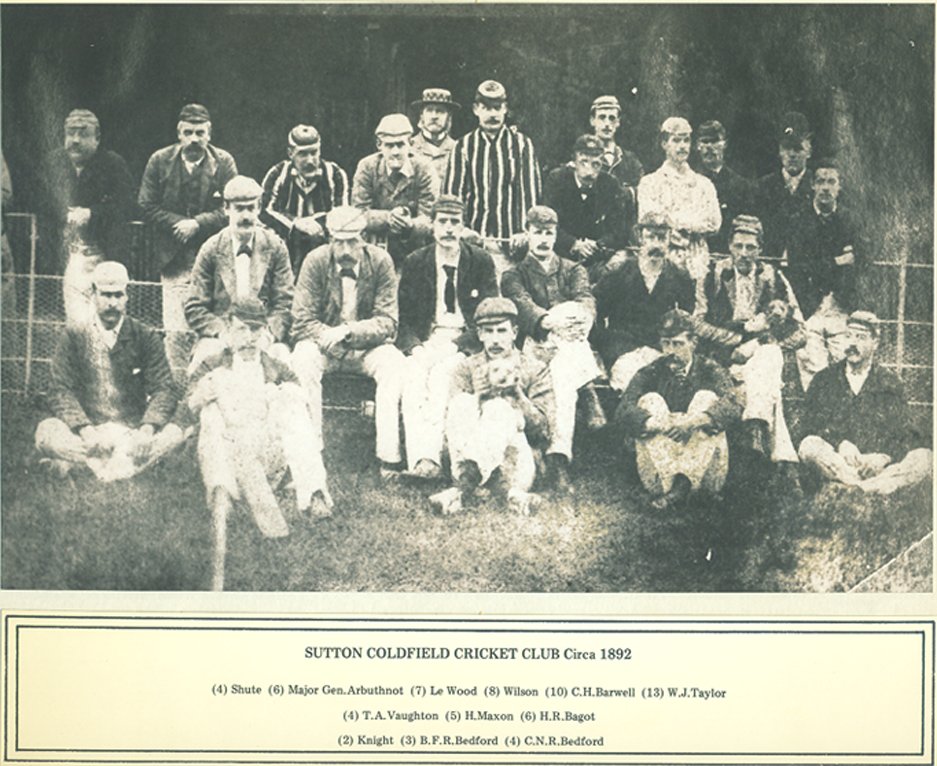
The First Fifty Years
1847-1899
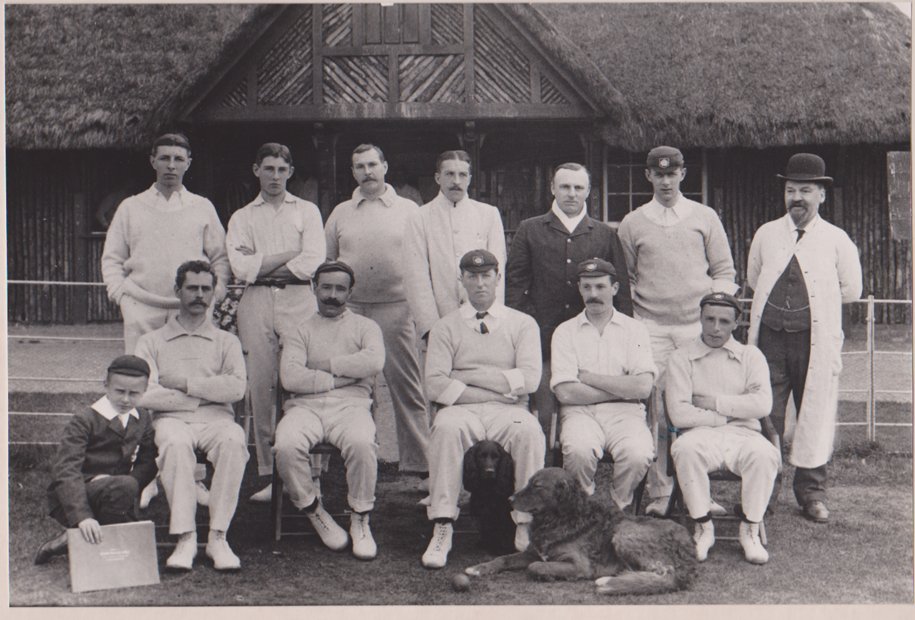
A Time of Change and Uncertainty
1901-1909
A Decade of Transition and Challenge
1910-1919
The Golden Resurgence
1920-1929
The Thirties
1930-1939
Wartime and Renewal
1940-1949
The Fabulous Fifties
1950-1959
Transformation and Tradition
1960-1969
Dixon's Decade
1970-1979
Trophies and Tragedy
1980-1989
Champions at Last
1990-1999
The New Millennium
2000-2009
The Twenty-Tens
2010-2019

The Twenty-Twenties
2020-Present