
Menu
Website Design & Development
1910-1919
The Last Summers
Record Scores, the Eighth of August, and the Names That Followed
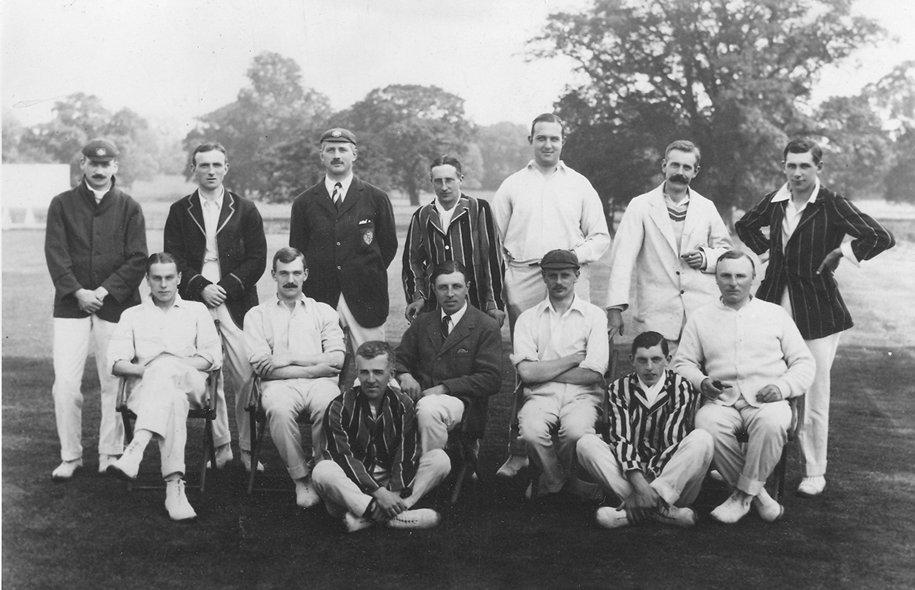
The Last Summers, 1910-1919
The decade opened with the last Bedford stepping down from the presidency and a schoolboy taking up the score book. It closed with a memorial tablet accepted for the pavilion, and a club that had very nearly lacked the men to reconvene at all.
Between those points lie the best cricket Sutton Coldfield had played — J.B. Russell's 172 and F.B. Clark's 89 wickets in the summer of 1914 — and the abrupt silence that followed the last fixture on 8th August. The men who filled the team photographs of 1911, 1912 and 1913 were, within four years, scattered across the Somme, Flanders, Arras and the Royal Flying Corps, and twelve of them are the subject of full biographies in the club's own records. How many went and how many came home the club has never been able to state: its accounts give figures that cannot be reconciled, and the Roll of Honour that hung in the pavilion was destroyed before anyone thought to copy down the names.
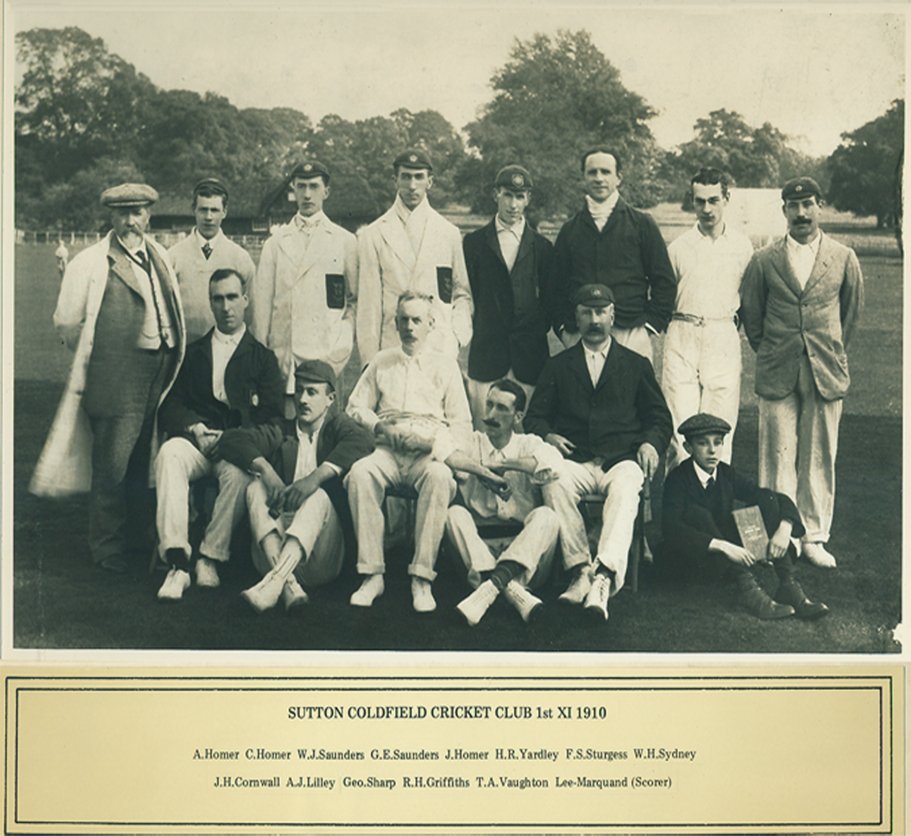
The 1st XI of 1910, the year the last Bedford president retired.
The Last Bedford, and a New Hand on the Book
In 1910 the Rev. W.C.R. Bedford retired as President, ending more than six decades in which the Bedford family had led the club from its foundation to stability. The following year the Rev. Canon C.W. Barnard was elected in his place — the first president from outside the founding family, and proof that the club could continue beyond it. The season itself was a good one, with strong batting from L.C. Crockford, J.B. Russell and E.B. Crockford and consistent bowling led by Dr. Sproat.
1910 also gave the club its finest recorder. Norman Sharp, whose father had joined five years earlier, became 2nd XI scorer that year; many of the pre-First World War score books were completed in his hand, and he appears in a great many of the pre-war team photographs. The books of 1913 and 1919 survive, filled in by a schoolboy of fourteen, and it is largely through them that these seasons can still be read. He played his first game for the club in 1915, while still at school.
Off the field the club was busy in a small way. The top and lower grounds were let in winter to hockey and football clubs, arrangements carefully managed to protect the square while bringing in useful income, and W.L. Mortimore joined in 1912, contributing both as a player and in the club's organisation. The horse remained on the establishment, though not always in good standing: a minute of 1912 records it 'being sacked for kicking the groundsman'.
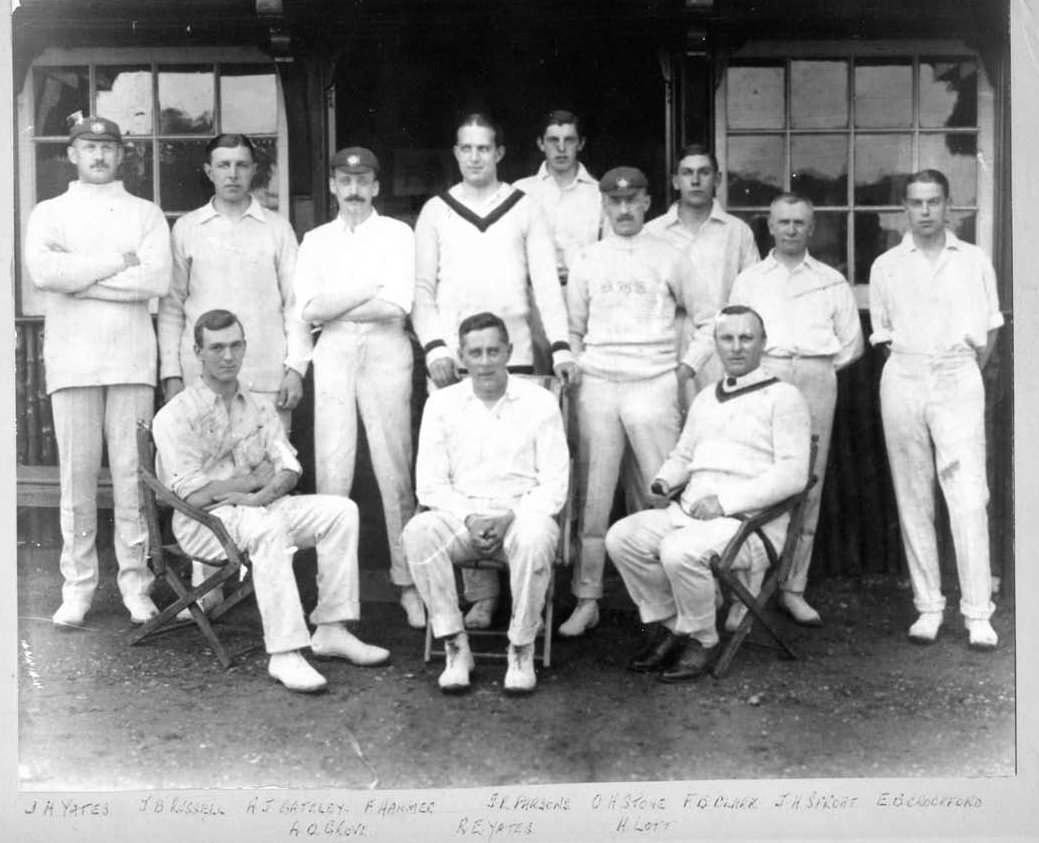
Sutton Coldfield CC, 1911 — the first season under Canon Barnard's presidency.
Heavy Scoring Before the War
The cricket of the early 1910s was as strong as any the club had known. The 1911 season included a remarkable bowling sequence against Nuneaton in which several wickets fell in consecutive deliveries; J.B. Russell and E.B. Crockford went on contributing heavily with the bat, Frank Hanmer emerged as the leading fast bowler, and club characters such as C. Lowe gave the side its flavour of long-serving amateur enthusiasm.
Crockford's own rise was the story of the summer. Eric Bertram Crockford, known as Tom, began in 1911 a first-class career with Warwickshire that would run to 1922. He would go on to win an Olympic gold medal in the hockey tournament at Antwerp in 1920, represent England on seventeen occasions, and hold a number of records for the highest break at billiards.
1912 brought multiple centuries in single matches, with Roger Evans, Crockford and H. Lott all producing significant innings, and in 1913 J.B. Russell took the captaincy — batsman, wicketkeeper and captain, and one of the club's most influential figures. F.B. Clark led the bowling, several men averaged over thirty, and a public flying display was watched from the ground. The side was drawn largely from the professions of the town: clergy, doctors, ex-military officers, accountants, solicitors, aldermen, councillors, justices of the peace and former mayors. Horace Shenton, from a Staffordshire farming family and employed in the automotive machine trade, was not the sort of man one expected to find among them.
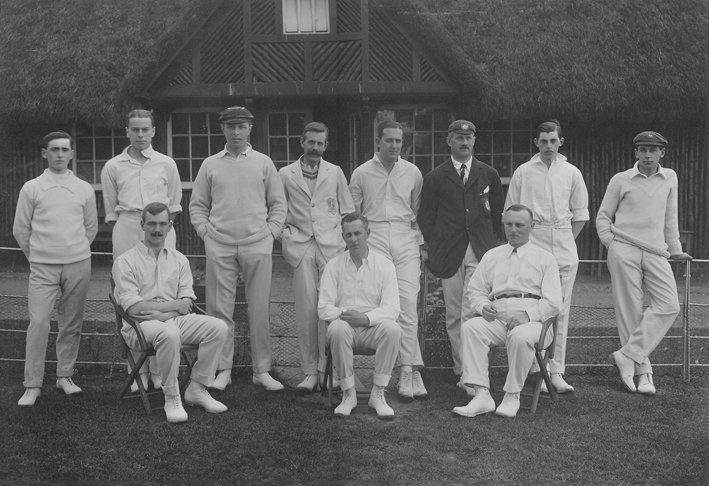
Sutton Coldfield CC, 1912 — the season Rowland Wilson-Browne was elected a member.
The Men Who Joined, 1910–1913
Walter Bladen Sampson was elected a member on 25th January 1910. Little of his cricket is recorded, but he had served six years as Colour Sergeant with the University of Birmingham OTC before declining a commission, and worked first for the Royal Insurance Company and then with Allison Chains Ltd. Frederick Howard Sturgess needs no such qualification: he topped the 'A' Team batting and bowling in 1910 with 134 runs at 22.3 and 24 wickets at 5.8, and in 1911 led the 2nd Team averages with 285 runs at 40.7, including 126 not out, and 11 wickets at 11.9. For all that, and although his father was a key committee member, he was not elected a full member until 10th March 1913.
Reginald Bertram Clive Chopping joined on 10th May 1911 and played several seasons for the 'A' Team without great distinction. Septimus Eric Parsons joined the same year at nineteen, a competent batsman who generally went in at No. 7 because of the seasoned men above him; on 10th June 1911 he shared a sixth-wicket partnership of 92 with E.B. Crockford at Barnt Green, making 41 not out, and opened the innings for 28 in the drawn return at Rectory Park. Percy Grove, meanwhile, recorded match figures of 6 for 11 at Harborne in 1911 and became the club's Honorary Secretary.
Rowland Murray Wilson-Browne was elected on 29th May 1912 and belonged to the swimming club as well; his sporting life was so busy that he scarcely figures in the club's match records. Esmond Hallewell Rogers, of Shrewsbury and Gonville and Caius, played for Warwickshire's 2nd XI in May 1912, scoring 46 and 16 against Northamptonshire at Edgbaston with Percy Jeeves batting immediately after him. John Howard Felton — Jack — was at Bishop Vesey's from 1912 to 1914 and played for the 'A' Team, as did Lawrence Jack Preedy of King Edward's Grammar School, who was also organist at All Saints Church, Streetly.
Sutton Coldfield CC, 1914 — the last summer before the war.
The Eighth of August
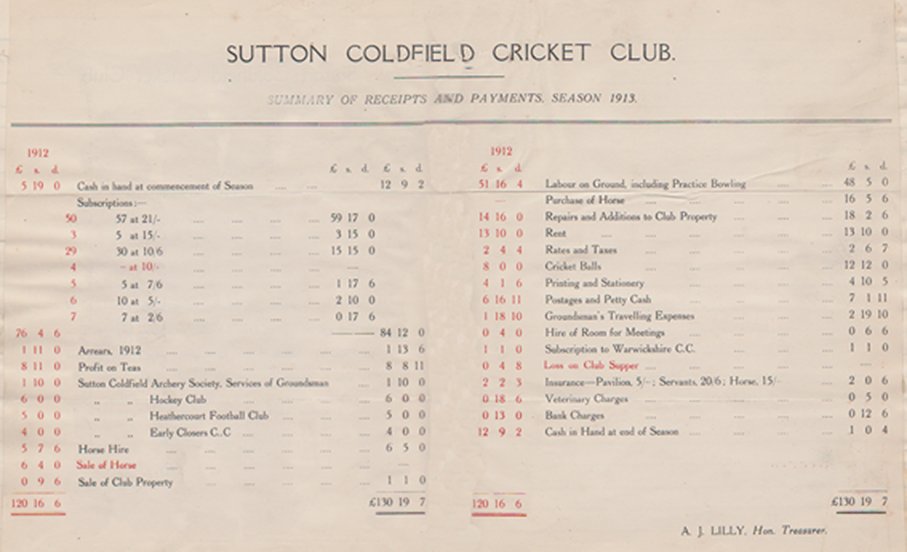
The 1914 season began under entirely normal conditions. The Annual General Meeting was held on 6th March at the Masonic Hall Chambers, the accounts for 1913 showed a stable club, and the annual supper went ahead at the Royal Hotel. Committee business ran to such matters as tea arrangements, which produced a decision to build a shed for the 'A' Team on the lower ground — funded, characteristically, through a Derby sweepstake.
The cricket was outstanding. J.B. Russell made 172, the highest individual score the club had recorded, and F.B. Clark took 89 wickets at under ten runs each, including 10 for 35 against Yardley, the finest analysis of a career that spanned sixty-two years of membership, over a thousand wickets and well over ten thousand runs. On 4th July, in the 2nd XI away at Wolverhampton, Horace Shenton played his last game for the club: batting at No. 6 he made 18, then bowled six overs, one of them a maiden, taking 1 for 27. He enlisted with the Birmingham City Battalion on its formation.
Nothing was played after 8th August, when the last pre-war 1st XI fixture was completed at home to Camp Hill Old Edwardians, and the score books were never collected in from the teams' captains. Fixture cards gave way to circulars. Convalescent camps were built in Sutton Park, where across the four years of the war some 90 officers and 3,000 men were billeted, and the clubhouse itself was given over to wounded men recovering before they returned to their units. Such matches as there were consisted mainly of scratch sides against service elevens stationed locally — and in September 1917 Edward Markwick, invalided home with rheumatic fever, turned out for the club while he recovered.
1916 — one of the few photographs surviving from the war years at Rectory Park.
The Roll of Honour
1916 took five of them. Percy Grove, the Honorary Secretary, was severely wounded by a bomb on 1st July on the Somme and died at the 2nd British Red Cross Hospital in Rouen on the 5th, aged 27. Esmond Rogers of the 10th Royal Warwickshires was killed on 3rd July supporting the attack at La Boisselle. Walter Sampson, by then a captain in the Rifle Brigade, was killed in the attack near La Boisselle on 10th July, aged 25. Rowland Wilson-Browne, a Second Lieutenant with 21 Squadron of the Royal Flying Corps, was shot down on a bombing raid on 21st July, taken prisoner and died of his wounds at nineteen. Reginald Chopping, a signaller, was killed at Delville Wood on 27th–28th August and has no known grave.
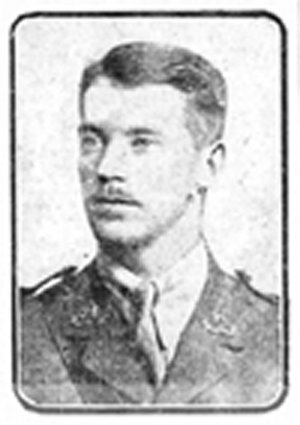
The list lengthened. Arthur Lilly, treasurer since 1906, was killed by a sniper at Tertry on 4th April 1917, aged 35. Horace Shenton, wounded by shrapnel the previous August, died of his wounds on 27th August 1917, aged 38, and was buried at Sutton Coldfield Cemetery with a full military funeral. Lawrence Preedy was killed instantly by a sniper on 31st March 1918 while trying to bring in a wounded man; Jack Felton, nineteen and only lately arrived in France, was killed on 10th April in his first battle; Septimus Parsons, by then a captain, was killed by shelling near Robecq on 14th April. Edward Markwick died of pneumonia at Awoingt on 9th November 1918, two days before the Armistice, his headstone inscribed 'What more could he give'. Frederick Sturgess, gassed and concussed near Loos in November 1917, died of acute pneumonia in 1919. The club's Annual General Meeting of 24th April 1917 recorded Wilson-Browne and Rogers by name.
How many members served, and how many did not return, the club cannot say. Its own accounts give a minute-book reading that fifty went to the Great War and only ten came back; another that forty of fifty playing members were lost; another that nearly fifty enlisted; a later researched conclusion that thirty-nine went and fourteen did not return; and the club's own memorial page that thirty-nine served and thirteen died. Twelve men have full biographies in the club's records, and a thirteenth, Albert Edward Wakefield of the 'A' Team, was killed near St Julien on 17th August 1917, aged twenty. The Roll of Honour that had hung in the pavilion was, in Norman Sharp's words, 'destroyed by hooligans', and no record of the names was ever set down in writing. A memorial tablet was proposed and accepted in 1919, the year cricket returned: F.B. Clark scored 814 runs and took 74 wickets in a first-team season of twenty-one matches, eight of them won, and Norman Sharp, leaving Bishop Vesey's, became a full member at last.
The Men that Served
Following Research in 2016 identified a total of 39 members of the Sutton Coldfield Club served their Country in the 1st World War or the Great War of which 13 paid the supreme sacrifice. This list will never be closed should further member(s) be identified.
Abrahall
S EService: Royal Warwickshire Reg
Barton
AService: South Staffs Reg
Britton
L CService: Royal Warwickshire Reg
Browne
H JService: Public School Battalion
Chapman
FService: Royal Field Artillery
Chopping
R B CService: Royal Warwickshire Reg
Killed in conflict 28 Aug 16
Clarke
F BService: North Staffordshire Reg
Crockford
L CService: Royal Warwickshire Reg
Crockford
E BService: Royal Warwickshire Reg
Davies
HService: Royal Warwickshire Reg
Etchells
TService: Manchester Reg
Evans
J R LService: Worcester Reg
Felton
J HService: 10 bt Royal Warwickshire Reg
Killed in conflict 10 Apr 18
Gateley
A JService: Liverpool Reg
Grove
P AService: South Staffs Reg
Killed in conflict 4 Oct 17
Hadley
AService: Royal Engineers
Hall
NService: South Staffordshire Reg
Hallewell-Rogers
EService: Royal Warwickshire Reg
Died 3 Jul 16
Homer
C RService: Royal Warwickshire Reg
Jenkins
DService: Bengali Patiala Reg
Lilly
A JService: Royal Warwickshire Reg
Killed in conflict 2 Mar 17
Malkin
WService: Royal Warwickshire Reg
Marwick
E BService: 2nd Signal Co, Royal Engineers
Died of Pneumonia 9 Nov 18
Norton
J HService: Royal Warwickshire Reg
Oxford
F SService: Royal Warwickshire Reg
Parkes
OService: Royal Navy
Parsons
S EService: Royal Warwickshire Reg
Killed in conflict 14 Apr 18
Pearson
E LService: Royal Warwickshire Reg
Pochin
HService: South Staffordshire Reg
Preedy
L JService: 4th bt Royal Warwickshire Reg
Killed in conflict 31 Mar 18
Ray
J CService: South African Artillery
Simpson
W BService: Rifle Brigade
Killed in action 10 July 1916
Shenton
H EService: 14th bt Royal Warwickshire Reg
Died of Wounds 27 Aug 17
Sturgess
F HService: South Staffordshire Reg
Pneumonia effects of gas 15 Apr 19
Tabb
E JService: Royal Warwickshire Reg
Wakefield
A EService: 1/7th bt Worcestershire Regiment
Killed in conflict 17 Aug 17
Whillier
E CService: Essex Reg
Wilson-Browne
R MService: RFC 21st Squadron
Wounded & Died a POW 21 Jul 16
Yates
J HService: R A M C
Key Moments
1910
The Last Bedford President
The Rev. W.C.R. Bedford retired as President, ending more than six decades of Bedford leadership at Rectory Park.
1910
A New Hand on the Score Book
Norman Sharp became 2nd XI scorer and began filling the pre-war score books in his own hand.
1911
A President from Outside the Family
The Rev. Canon C.W. Barnard was elected President, the first from outside the founding family.
1911
Grove Becomes Secretary
Percy Grove took 6 for 11 at Harborne and became the club's Honorary Secretary.
1912
The Horse Dismissed
A club minute of 1912 records the ground horse being sacked for kicking the groundsman.
1914
A Record Summer
J.B. Russell made 172, the club's highest individual score to that date, and F.B. Clark took 89 wickets at under ten runs each.
1914
The Eighth of August
The last pre-war 1st XI fixture was played at home to Camp Hill Old Edwardians; the score books were never collected from the captains.
1916
Grove Dies at Rouen
Wounded on the Somme on 1st July, the Honorary Secretary died in hospital at Rouen four days later, aged 27.
1917
Remembered at the AGM
The Annual General Meeting of 24th April 1917 recorded Rowland Wilson-Browne and Esmond Rogers among the club's dead.
1919
Cricket Returns
A memorial tablet was accepted for the pavilion and F.B. Clark scored 814 runs and took 74 wickets as the 1st XI played twenty-one matches.
"He was a great personal friend of mine, and in his quiet way had a great influence with his company. He was always a quiet, conscientious Christian, never made a complaint, and was always the first to do anything that was wanted – nothing upset him."
Jump to New Decade
Foundations Before Formation
1837-1847
The First Fifty Years
1847-1899
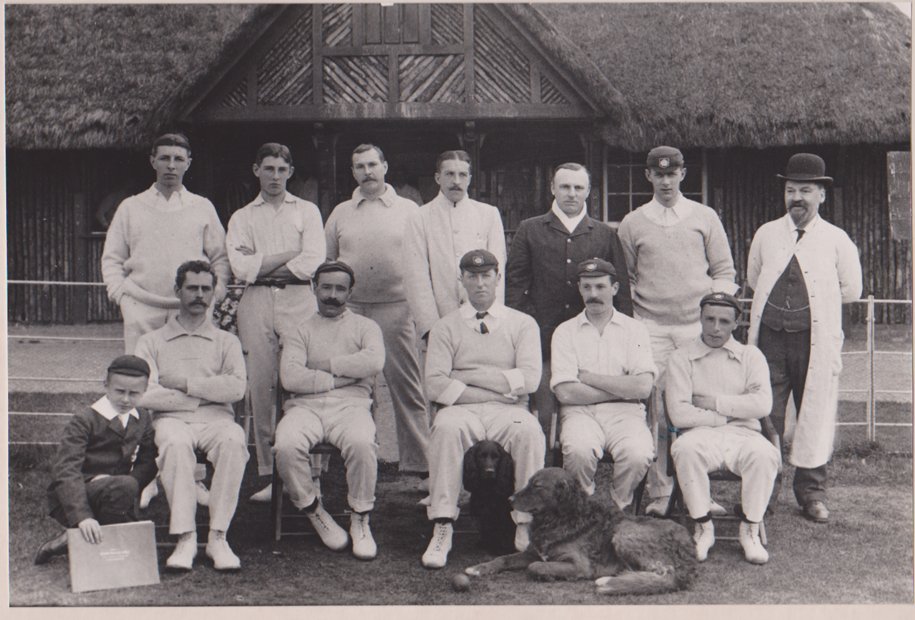
A Time of Change and Uncertainty
1901-1909
A Decade of Transition and Challenge
1910-1919
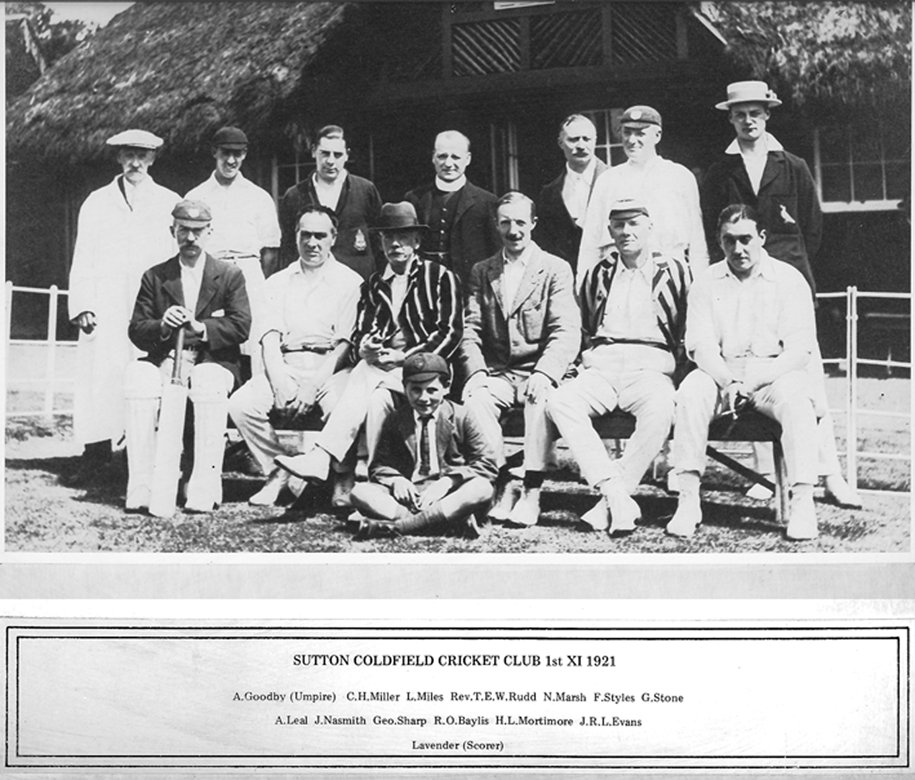
The Golden Resurgence
1920-1929
The Thirties
1930-1939
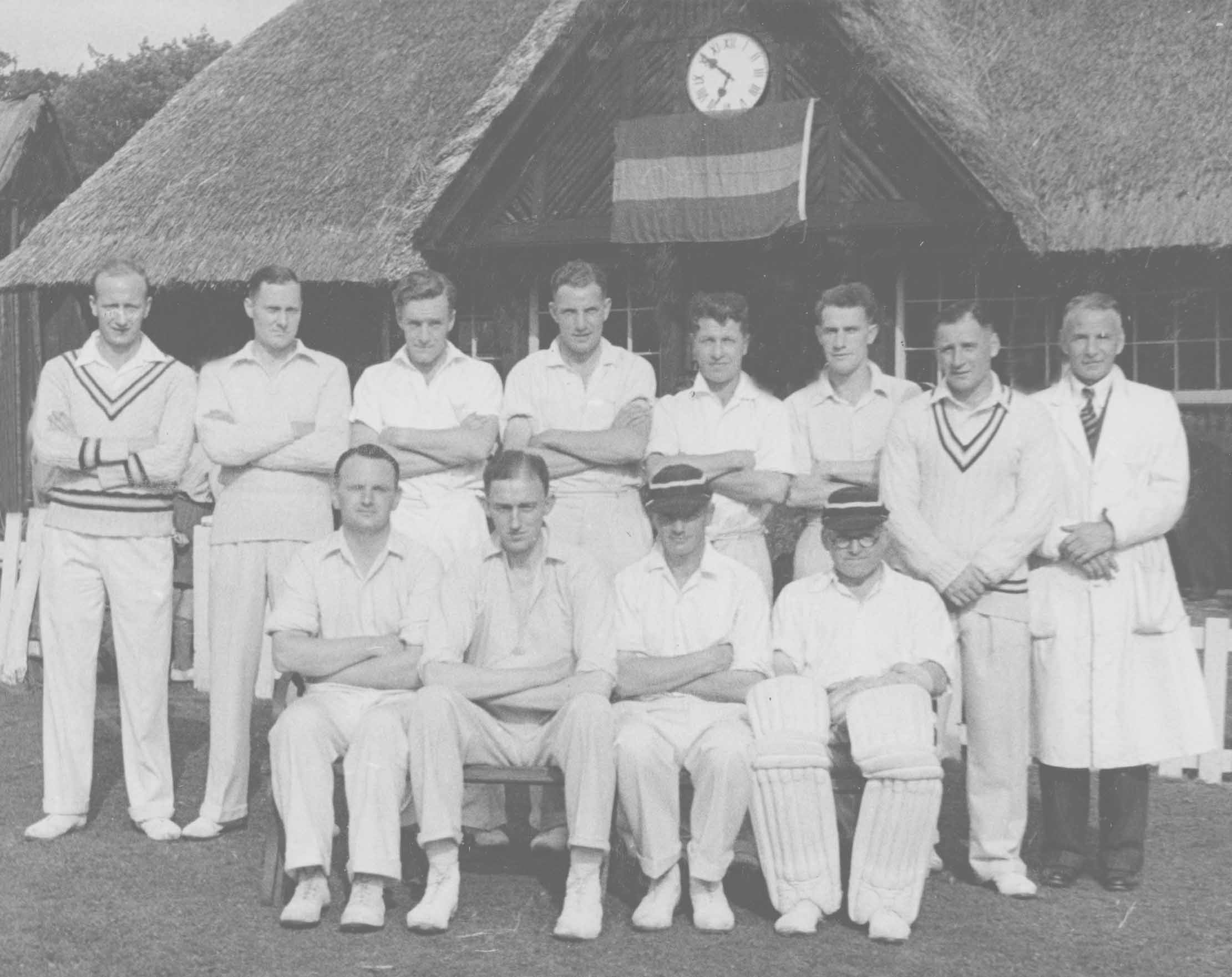
Wartime and Renewal
1940-1949
The Fabulous Fifties
1950-1959
Transformation and Tradition
1960-1969
Dixon's Decade
1970-1979
Trophies and Tragedy
1980-1989
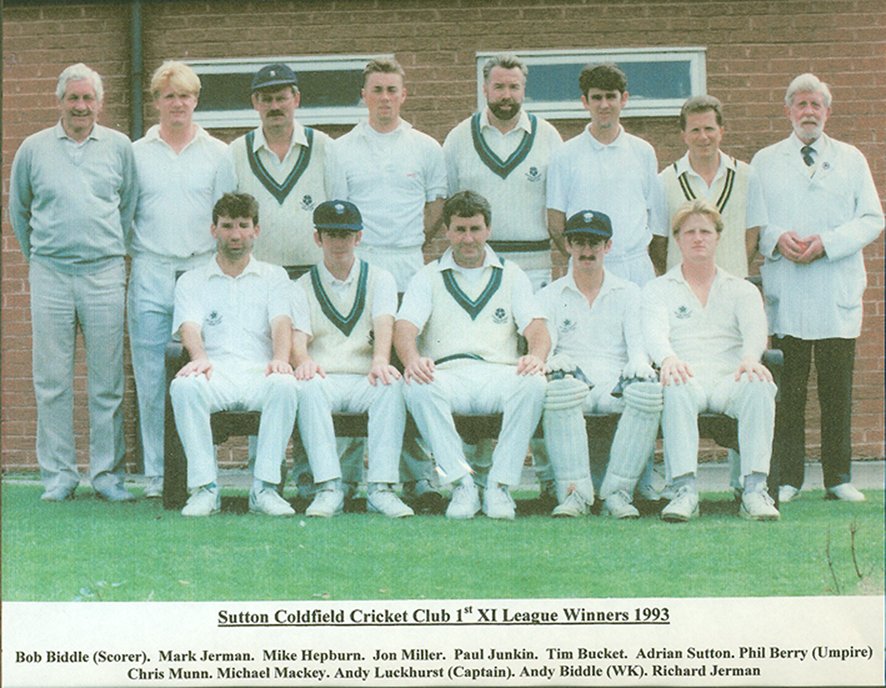
Champions at Last
1990-1999
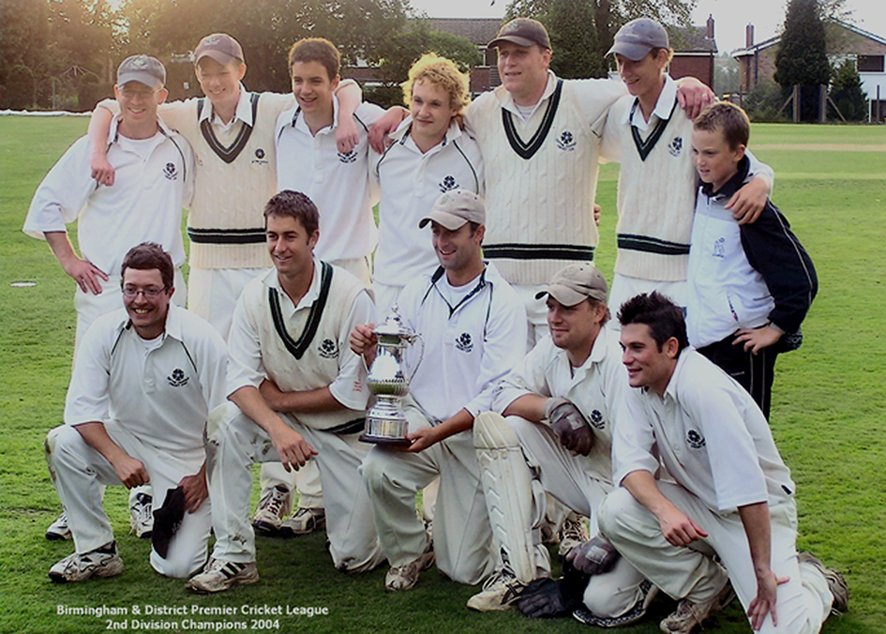
The New Millennium
2000-2009
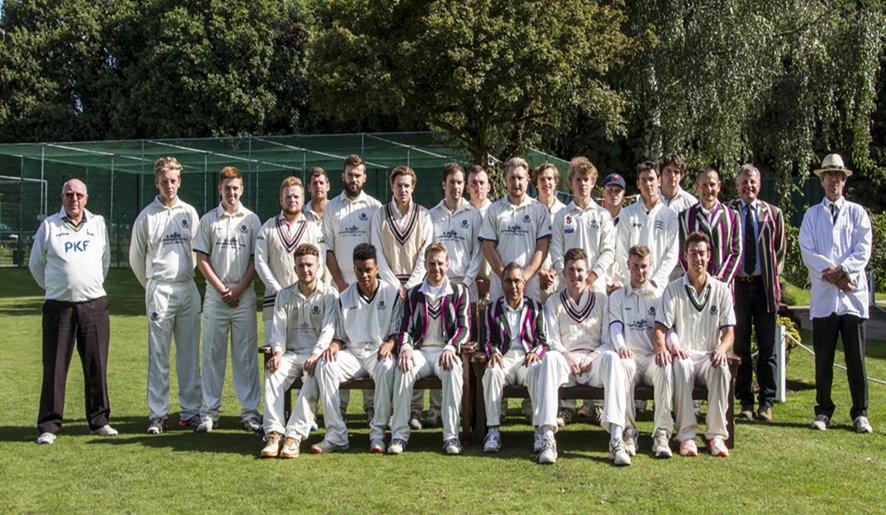
The Twenty-Tens
2010-2019
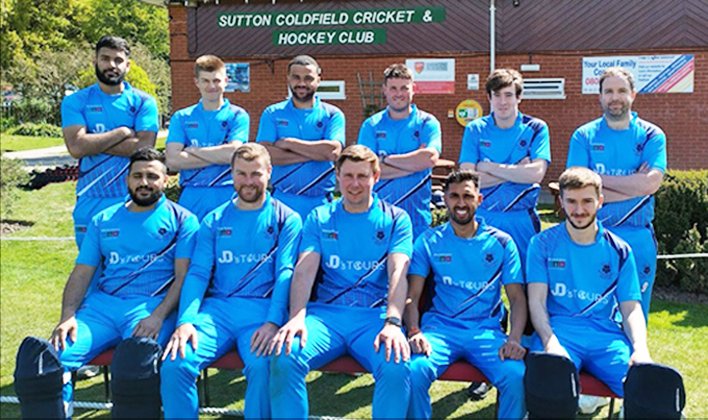
The Twenty-Twenties
2020-Present