
Menu
Website Design & Development
1920-1929
The Golden Resurgence
Sutton Coldfield Cricket Club in the 1920s
The Golden Resurgence, 1920-1929
The 1920s marked a period of renewal, growth, and sporting distinction for Sutton Coldfield Cricket Club.
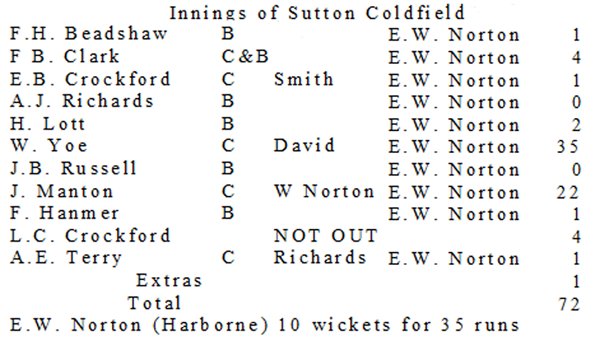
Emerging from the disruption of the First World War, the Club re-established itself as one of the strongest and most respected cricketing institutions in the Midlands. The decade combined administrative stability, steady financial recovery, and an exceptional standard of cricket, reflecting both the changing social fabric of the town and the renewed importance of organised sport within the community. Strong leadership from long-serving officers ensured continuity, while investment in facilities transformed Rectory Park into a ground of growing distinction. The pavilion, enclosure, and playing surfaces were improved steadily throughout the decade, reinforcing the Club's commitment to hospitality and presentation. Off the field, social events, shared use of the ground, and collaboration with hockey, tennis, and community organisations strengthened the Club's role at the heart of local life. On the field, Sutton Coldfield enjoyed one of the most successful eras in its history. A remarkable concentration of county players, outstanding individual performances, and competitive fixtures against the strongest Midland clubs established a reputation for cricket played in the right spirit, but at the highest club standard.
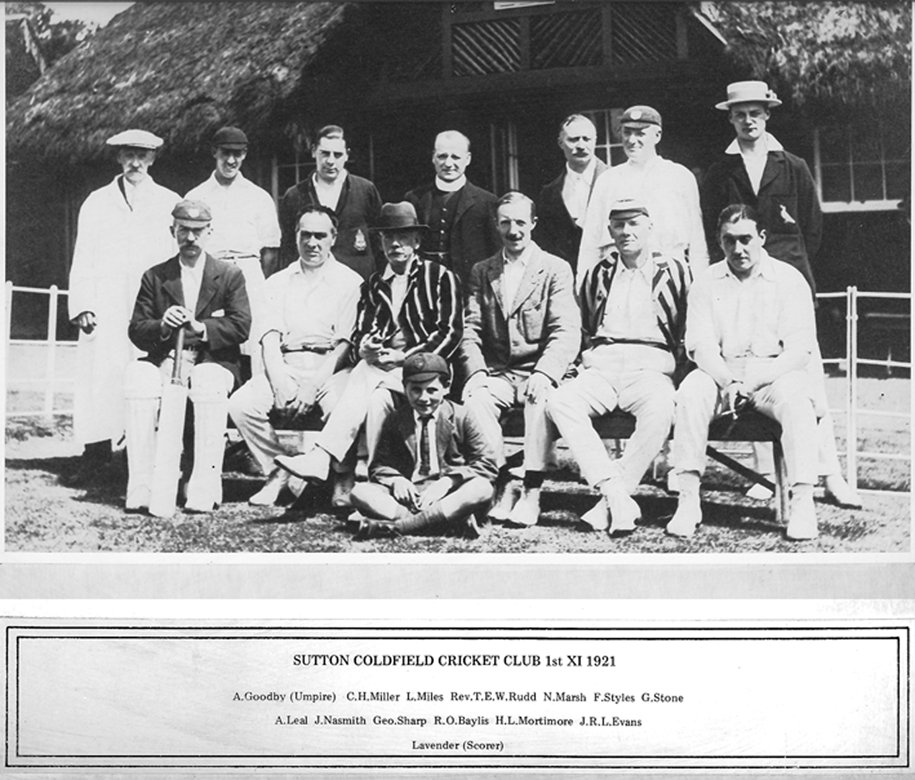
Sutton Coldfield CC, 1920
Leadership, Administration & Continuity
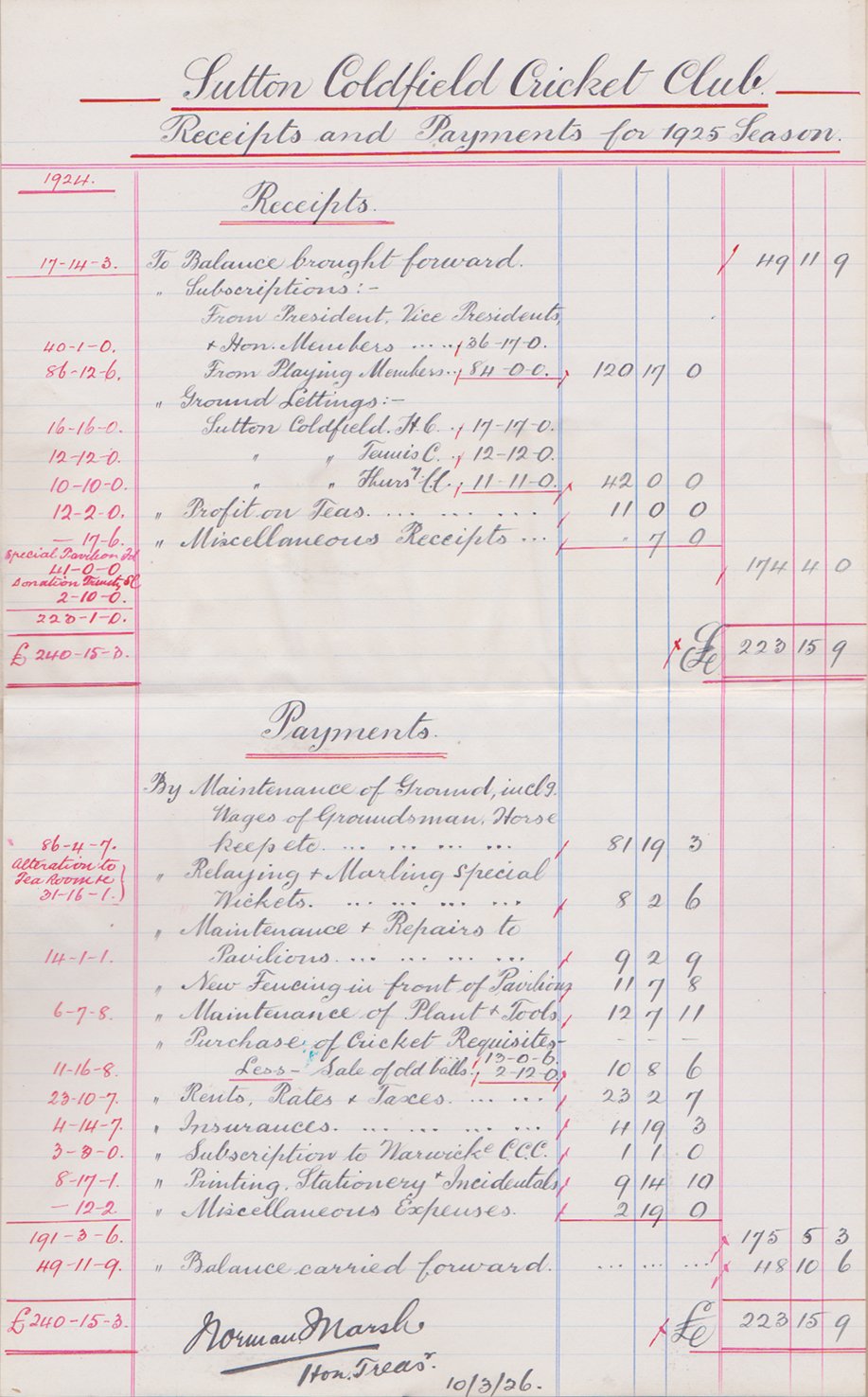
The 1920s were underpinned by exceptional service from dedicated officers and committee members. Figures such as George Sharp, Norman Marsh, J.B. Russell, E.B. Crockford, and F.H. Beardshaw provided stability through long tenures in secretarial, treasury, and captaincy roles. Their work ensured that post-war recovery was matched by prudent financial management and clear governance.
The decade also saw significant moments of transition. The passing of Norman Marsh, long-serving treasurer, and the later deaths of respected figures such as Canon C.W. Barnard were deeply felt. Each was commemorated with dignity, reflecting the Club's strong sense of heritage and gratitude.
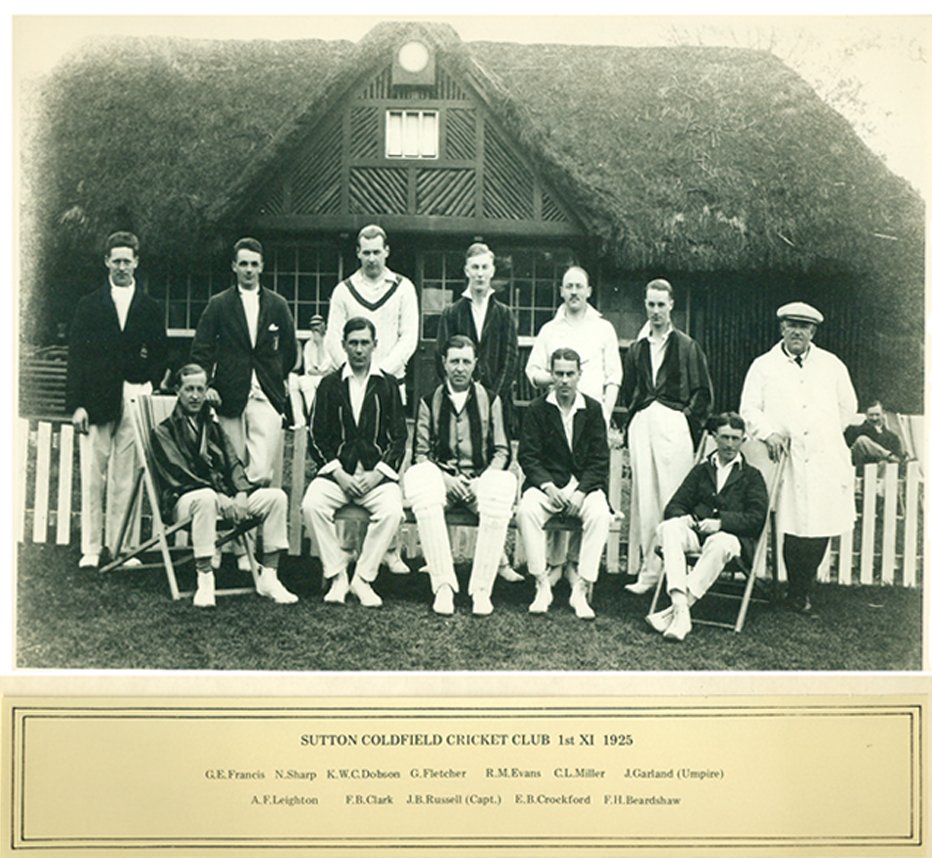
Sutton Coldfield CC, 1924
Facilities, Grounds & Pavilion Development
Major improvements to Rectory Park defined the decade. Pavilion re-thatching, the acquisition and conversion of army huts for teas, installation of sight screens, flower beds, railings, and the eventual connection of mains water in 1929 all transformed the matchday experience. These developments were often funded through member guarantees, benefit matches, and innovative fundraising initiatives.
The planting of trees and hedges along the ground's boundaries preserved its rural character amid increasing residential development, while improvements to vehicle access acknowledged the gradual rise of motor transport.
Sutton Coldfield CC, 1926 — a side regularly containing county-level talent
Cricketing Excellence & Playing Strength
The standard of cricket reached remarkable heights. The Club regularly fielded sides containing multiple county players, including E.B. Crockford, F.B. Clark, A.F. Leighton, D.G. Foster, and N. Sharp. Batting strength was exceptional, particularly during the late 1920s, when Sutton possessed what was widely regarded as its finest batting order on paper.
Individual milestones abounded: Norman Sharp's first-ever thousand-run season in 1928, record partnerships, hat-tricks, and centuries against leading Midland opposition. Competitive fixtures against Wolverhampton, Leamington, Ashfield, and Olton provided both challenge and prestige.
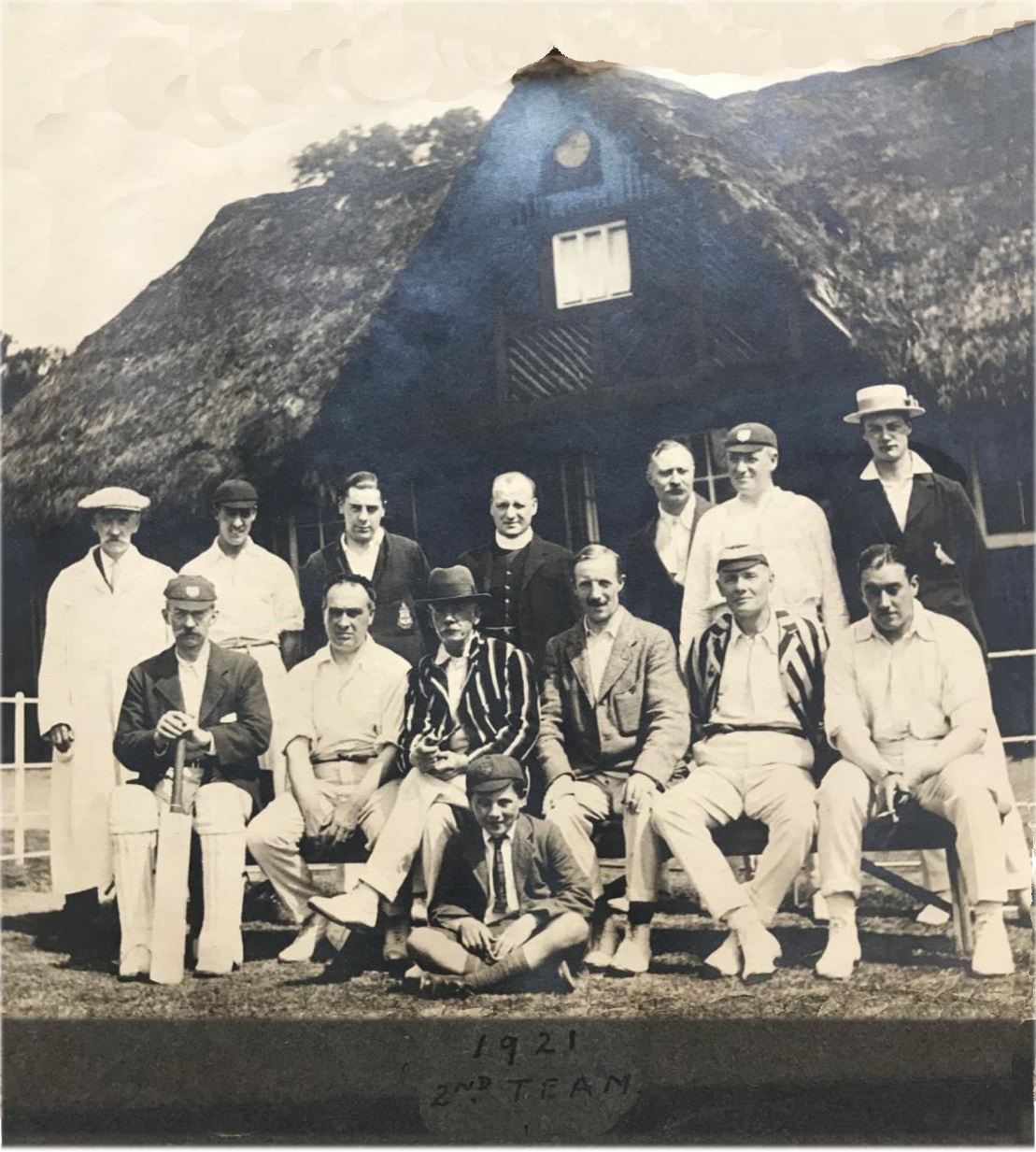
The club photographed in front of the thatched pavilion, 1921
Second XI, "A" Team & Club Culture
Beneath the First XI, the Second and "A" teams played a vital role in sustaining the Club's cricketing health. Veterans of the war years blended with emerging younger players, many of whom progressed to senior cricket. Despite limited resources, particularly for the "A" team, dedication and enthusiasm ensured the continuation of competitive cricket at all levels.
The decade was also rich in character and anecdote—benefit matches, humorous on-field incidents, evening cricket under daylight-saving, and shared use of the ground with other sports all contributed to a vibrant and enduring club culture.
Key Moments
1920
Post-war administration stabilised
Long-serving committee members formally recognised for extended service
1920
Professional groundsman appointed
Marked renewed investment in playing standards
1924
George Sharp honoured
Recognised for exceptional service, reflecting strong tradition of voluntary leadership
1926
Pavilion re-thatched
Sight screens introduced, significantly improving facilities
1928
Norman Sharp's thousand-run season
First club member to score 1,000 runs in a season
1928
Seven county players
Sutton fielded a side with seven current or former county players—unprecedented concentration of talent
1929
Mains water installed
Pavilion modernised, improving facilities and player welfare
1929
Trinity Monday sports discontinued
End of long-standing local tradition at Rectory Park
"Sutton Coldfield enjoyed one of the most successful eras in its history."
Jump to New Decade
Foundations Before Formation
1837-1847
The First Fifty Years
1847-1899
A Time of Change and Uncertainty
1901-1909
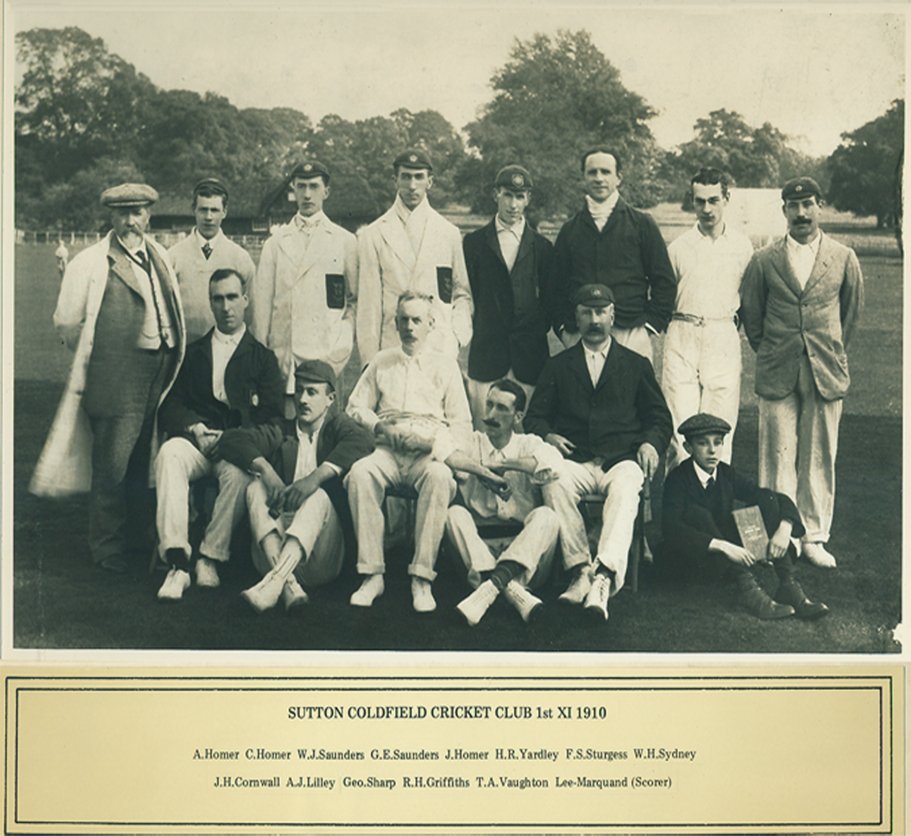
A Decade of Transition and Challenge
1910-1919
The Golden Resurgence
1920-1929
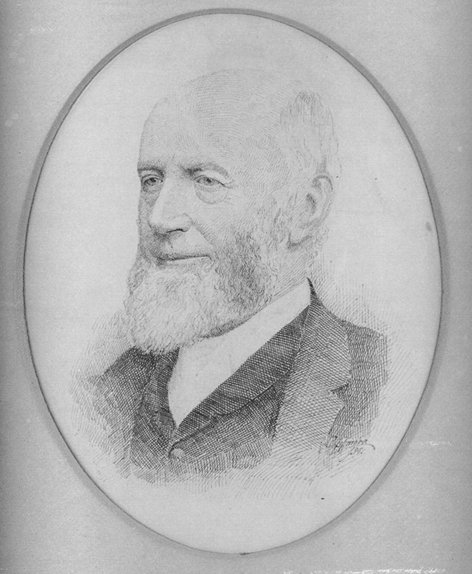
The Thirties
1930-1939
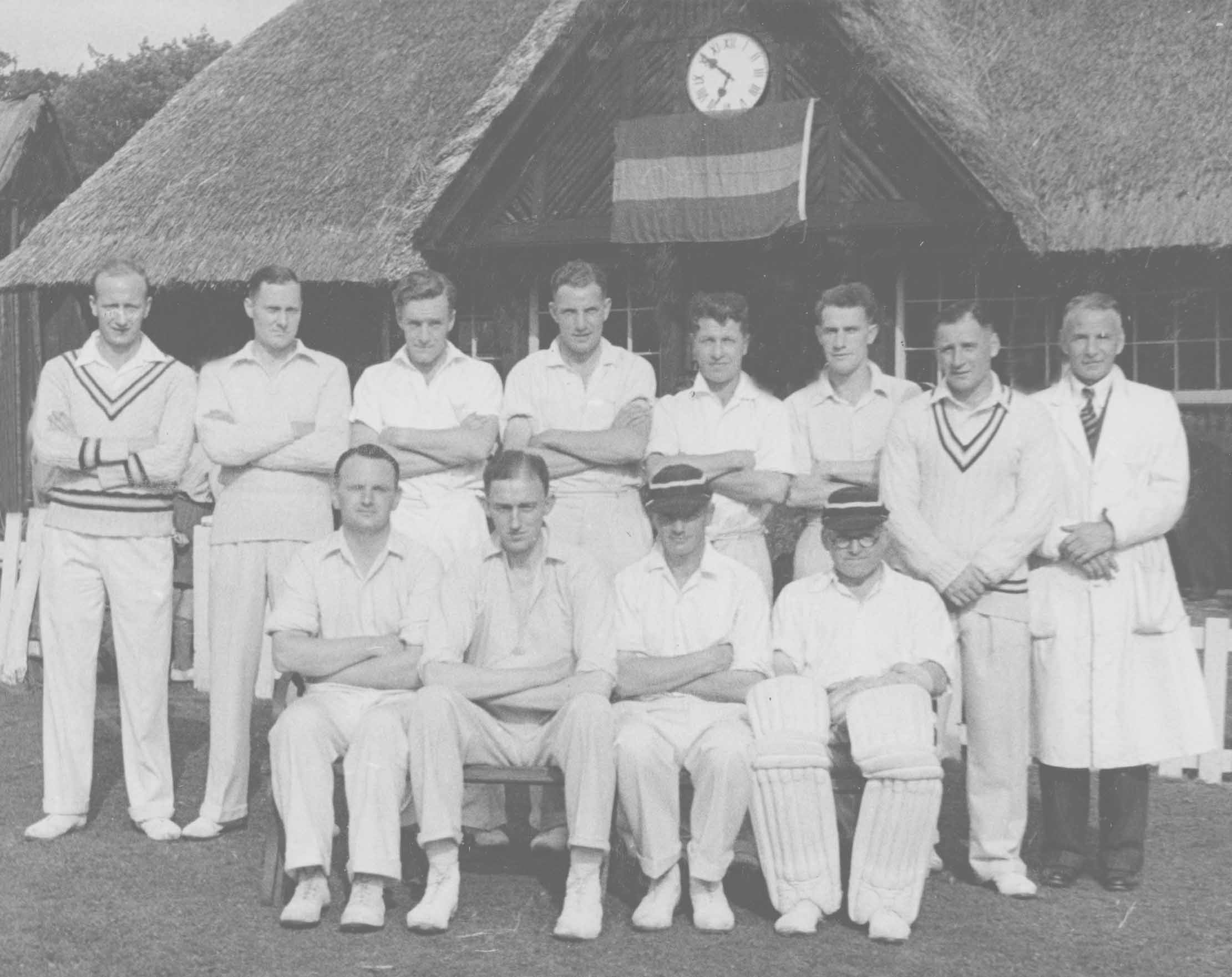
Wartime and Renewal
1940-1949
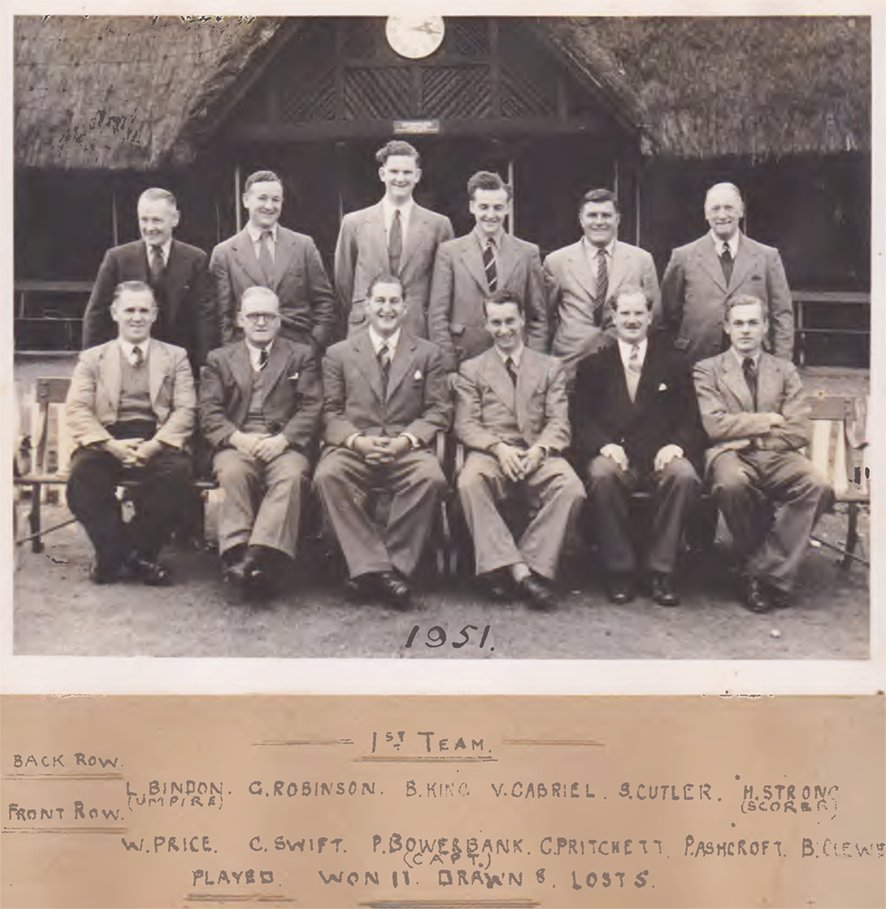
The Fabulous Fifties
1950-1959
Transformation and Tradition
1960-1969
Dixon's Decade
1970-1979
Trophies and Tragedy
1980-1989
Champions at Last
1990-1999
The New Millennium
2000-2009
The Twenty-Tens
2010-2019
The Twenty-Twenties
2020-Present