
Menu
Website Design & Development
1980-1989
Trophies and Tragedy
The Hawks' Hat-Trick and an Overseas First
The Eighties, 1980-1989
Michael Dixon walked off for the last time at the end of 1980, and the club that followed him won more than it had ever won before — cups, championships and Sunday leagues at every level — while the wider cricketing world kept arriving at Rectory Park.
The decade began with four batsmen past a thousand runs in a single season and ended with a nineteen-year-old off spinner from Harare coaching Sutton's juniors. In between, the ground staged I.C.C. World Cup warm-up matches involving Holland, Canada, the United States, Kenya and Zimbabwe; the Warwickshire Sunday League was founded and Sutton entered both elevens; and the 3rd XI, the Hawks, won three championships in a row. It was not all triumph. Vandals burnt down the lower ground pavilion and petrol-bombed the score-box, and in the middle of the decade the club lost Andrew Beach, its fixture secretary and one of the best-loved men ever to play for Sutton, at the age of forty-one. The trophy raised in his memory, contested between the cricket and hockey clubs, is the decade's most enduring legacy.
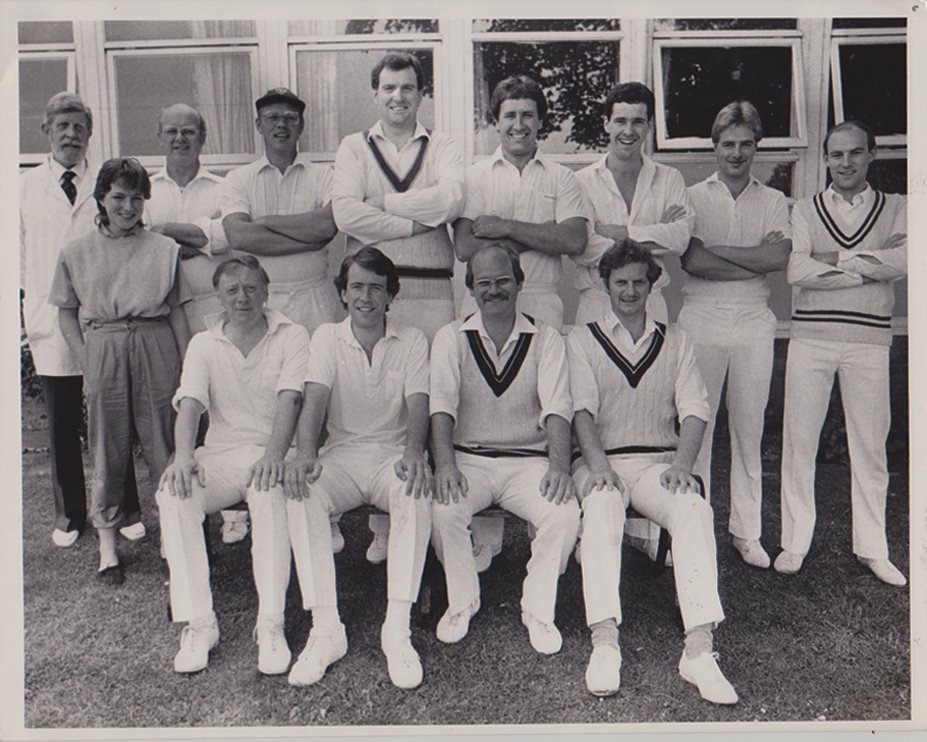
The Sutton Coldfield 1st XI of 1984: back row, Phil Berry (umpire), Kate Hodder (scorer), Graham Clarke, Graham Williamson, Andy Luckhurst, Bruce McLaren, Garry Moore and Mark Rogers; front row, Neil Houghton, James Ross, Mike Hepburn and Bob Strachan.
The Last Runs of Michael Dixon
Michael Dixon completed over a thousand runs in 1980 for the eleventh consecutive season, finishing with 1,022 and announcing his retirement at the season's end. He left as one of only three batsmen to have passed 12,500 runs for the club, with a grand total of 12,591, and still found time for two centuries in his final summer — 105 against Aston Unity and 110 against Stratford. What a player, the club's record says of him: captain, batsman and a fine fielder in the slips with a very safe pair of hands.
He was not alone in his run-making. Four 1st XI batsmen passed a thousand runs in 1980: Chris Barber with 1,169, including 195 at home to Moseley Ashfield; Graham Williamson with 1,022 and 105 not out against Aldridge; and James Ross with 1,003. Mike Joseph added a hundred against Olton. The best bowling came from a very fiery young fast bowler, Rod Long, who took 9 for 38 against Leamington, while Keith Gardom took 5 for 34 with his leg spin against Barnt Green.
The weather could be as cruel as any opponent. On one Rectory Park Saturday Sutton had Solihull at 55 for nine — John Robinson bowling superbly for 7 for 22, Bob Strachan finishing with 2 for 28 and Graham Williamson holding three fine catches — when the heavens opened and denied the side their first Duncan Fearnley League victory of the season. The next day, against Milford Hall, Sutton declared generously at 195 for three, Chris Barber hitting a sparkling 92, before rain ended that match too.
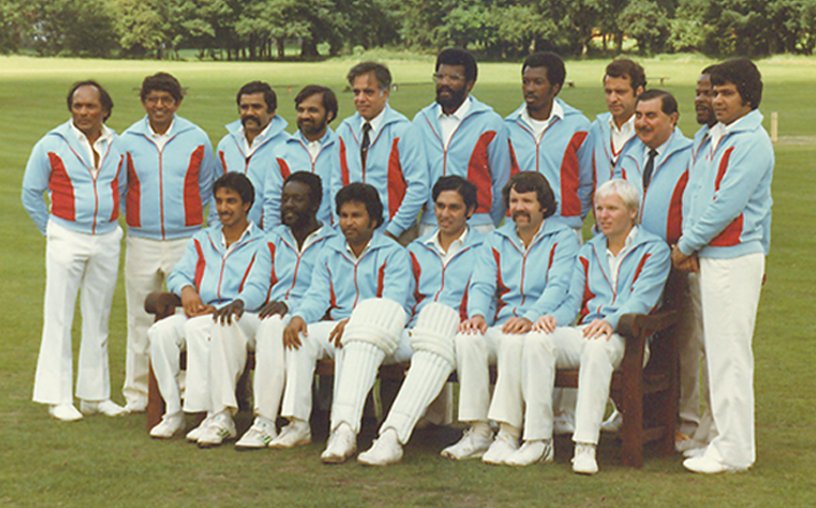
The plate beneath the team photograph naming the Sutton Coldfield 1st XI that met Holland on 4th July 1982 — C. Massey and P. Berry (umpires), A. Hodder, D. Jackson, B. McClaren, M. Joseph, J. Ross, C. Barber, R. Strachan, G. Williamson, M. Hepburn (captain), J. Robinson and A. Luckhurst.
The World Comes to Rectory Park
In 1982 a strong Sutton side entertained the Royal Netherlands Cricket Association in a 60-over I.C.C. warm-up match: Holland scored 293 for four before bowling Sutton out for 178 in the last over. The same ground staged an I.C.C. cup tie in which Canada made 233 and the United States were all out for 95 — the hundredth meeting between the two countries. Four years later Rectory Park hosted Kenya, all out for 82, against Zimbabwe, who replied with 85 for three.
Sutton's umpires were as much in demand as its ground. Peter Bell umpired the I.C.C. knockout tie in which Kenya's 210 for eight proved too many for Papua New Guinea, all out for 173, and was presented afterwards with a pair of cuff links by the beaten side. In 1986 he stood in another 60-over I.C.C. game, at Swindon C.C. in Gloucestershire, where Gibraltar were bowled out for 46 and Canada knocked off 48 without loss in 3.5 overs on a wet wicket after heavy morning rain.
The club's own cricket kept good company that summer. Graham Williamson made 105 not out against Olton and a young Andrew Hodder his maiden century, 100 against Fordhouse, following it with 6 for 49 at Streetly. Three other bowlers took six in an innings: Bob Strachan 6 for 24 against Stratford, Derrick Murphy 6 for 67 against Ashby and Dave Torry 6 for 67 against Coventry & North Warwickshire. George Griffith marked his debut with 115 not out for the 2nd XI at Bewdley, and the nets were relaid on concrete beside the roadway.
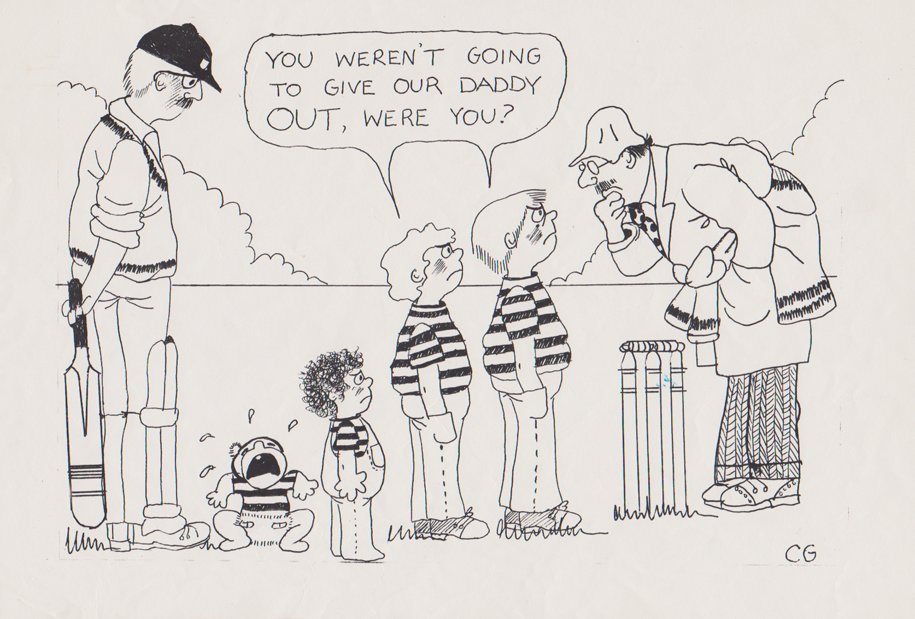
Carol Griffith's cartoon of the chairman, Peter Bell, and the secretary, George Griffith, from the club's 1986 handbook and fixture card.
The Committee Room, the Colts and a Sunday League
The club's administration changed hands steadily. Peter Wells became chairman in 1980 and was elected a Life Member when he stood down three years later; Peter Bell took the chair from 1983 to 1987 with George Griffith as secretary, and Dr Bob Strachan succeeded him. Roger Coombs retired in 1984 as ground secretary, a post he had held since 1975, and was elected a Life Member with Paul McCarthy in 1986. Three more followed in 1989 — the umpires Peter Bell and Phil Berry, for officiating respected by club and opposition alike, and Neil Houghton, elected Treasurer of Warwickshire C.C.C. in 1987.
The decade's most consequential meeting was held elsewhere. John Whitehouse, lately retired from Warwickshire for a career in accountancy, argued that the Sunday one-day game offered an opening to good class players with no wish for a full-time career in cricket, and called the senior Warwickshire clubs together; his proposal was agreed, the Warwickshire Sunday League was born in 1984 as a 40-over competition, and Sutton entered both elevens. Peter Wells's Colts side for boys under eighteen became a committee position in 1980, and the Colts toured East Anglia in 1983 and Cambridgeshire in 1986 under Andy Biddle.
Club life had its farces as well as its losses. The lower ground pavilion was burnt down and rebuilt by the members; in 1981 vandals destroyed the top ground score-box with a petrol bomb and Frank Lamb rebuilt it with subscribed funds. Best remembered is the goodwill of the local Citizens Band radio group, who rented the premises on Thursday evenings and offered to paint the outside of the pavilion in the summer of 1980 for a small fee. They did — and painted the old pine bench seats too, with the very slow-drying paint required for asbestos. For seasons afterwards you could recognise anyone who had played at Rectory Park that summer by the green stripes on their flannels, which no dry cleaner could shift.
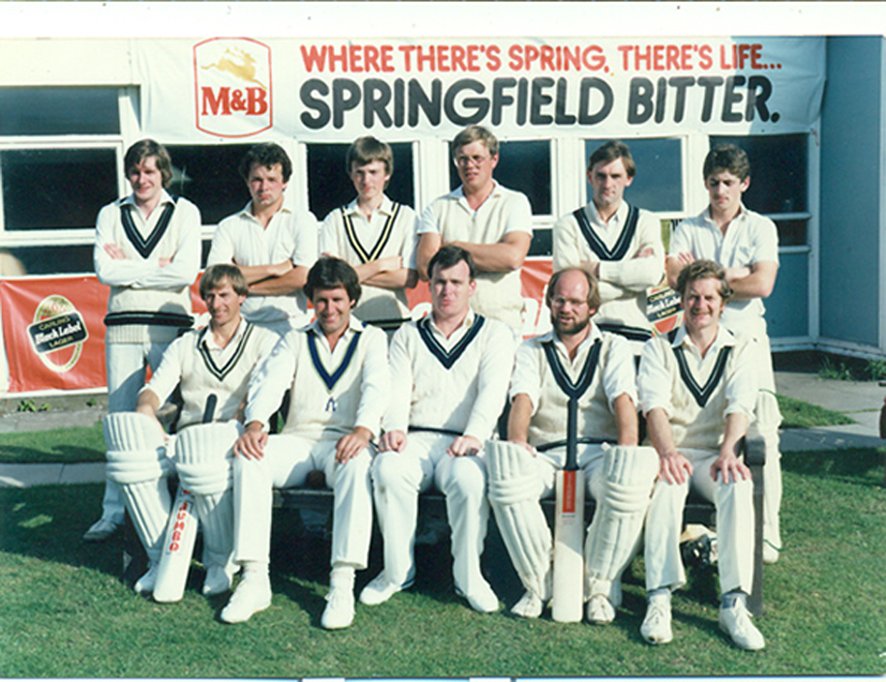
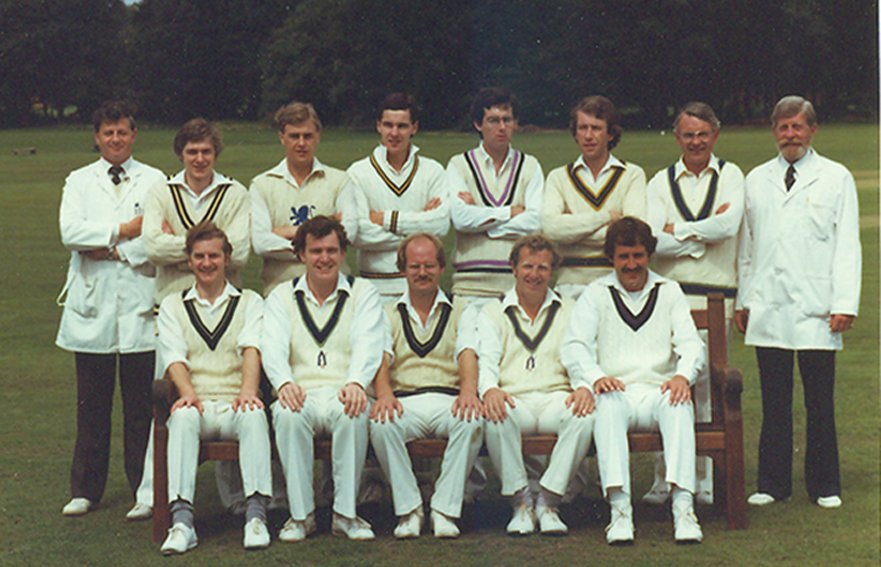
The winners of the Sutton Coldfield K.O. Cup, 1985: back row, Andrew Hodder, Richard Abel, Gary Moore, Graham Clarke, Bob McGowan and Andy Biddle (wicket-keeper); front row, Geoff Hopkinson, Andy Luckhurst, Graham Williamson (captain), Mike Hepburn and Bob Strachan.
Cups Won, and a Friend Lost
1985 was the summer of cups. The 1st XI beat their local rivals Aston Unity four times over — in the Warwickshire Sunday League, in the club's own knockout competition, in the Walmley tournament of fifteen eight-ball overs and in the Wishaw six-a-side — and went on to win their own K.O. Cup for the first time, following it the very next day with the Wishaw Six-a-Side Cup. The winning side was Andrew Hodder, Richard Abel, Gary Moore, Graham Clarke, Bob McGowan, Andy Biddle behind the stumps, Geoff Hopkinson, Andy Luckhurst, Graham Williamson as captain, Mike Hepburn and Bob Strachan.
The following year brought narrow wins and more short-form silverware. Graham Clarke took the last Halesowen wicket off the last ball of the match to finish with 6 for 57, and bowled twenty-three overs for 5 for 98 against Walsall, who declared at 215 for five before Sutton were dismissed for 96. In the 2nd XI's most remarkable afternoon Neil Gamble took 6 for 18 in twelve overs and Derrick Murphy 4 for 16 in eleven to bowl Stratford out for 34, Sutton winning by seven wickets. The club also won the Winter eight-a-side indoor league and the Wishaw six-a-side for a second year.
Against all of that stood the loss of Andrew Beach, the club's fixture secretary, who died after a short illness at the age of forty-one; the club's own papers place the loss before the 1985 season in one account and in 1986 in another, and the year cannot now be settled. Known to his friends as "Chub" or "Beachey", he had joined from Taunton School in 1963 and taken 94 wickets in his first season, forty of them stumped by his friend Roger Coombs. He batted, by his own choosing, at "10A" because it sounded better than last man, and hit two consecutive sixes onto the lower ground against the Canadian national side. Mike Hepburn organised a trophy in his memory, played for whenever the cricket and hockey clubs met.
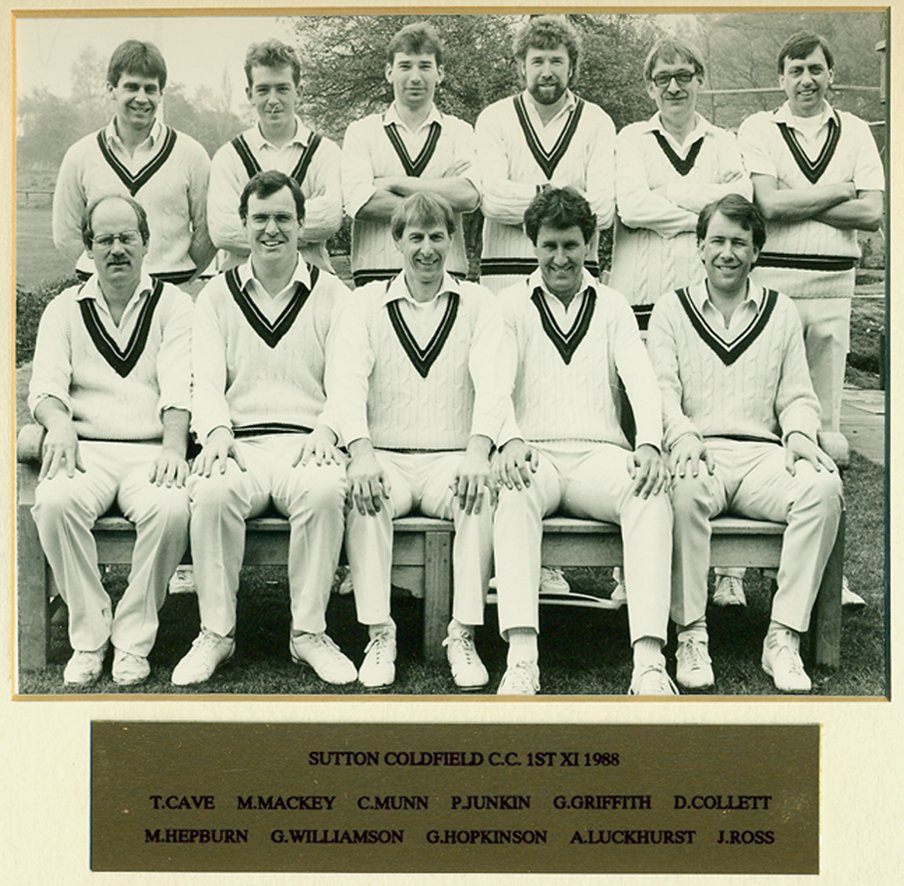
The Sutton Coldfield Sunday 2nd XI, winners of the Warwickshire Sunday League in 1988 and 1989: standing, Harry Walker (scorer), Richard Jerman, Maurice Watts, Jonathan Miller, Justine Roy, Mark Jerman and Chris Munn; seated, Adrian Colledge, Ken Lancaster, Chris Barber (captain), Bob Strachan and Mick Hooper.
The Hawks' Hat-Trick and a Professional from Harare
The closing seasons belonged to the lower elevens. The Hawks won the M.C.C.C. championship — by then sponsored and known as the Chesshire Gibson League — in 1987 under Ian Wood, again in 1988, and for a third successive season in 1989. A Sutton 3rd XI had already carried off the Jubilee Shield in 1981 and 1983, and a joint side of Hawks and Grasshoppers won it again in 1988. That was a year of silverware at almost every level: the club took the Warwickshire Winter Six-a-Side indoor league, the 2nd XI won the Warwickshire Sunday League — as they did again in 1989 — and Geoff Pritchett was named Cricketer of the Year by the Midland Club Cricket Conference.
Two all-rounders shaped the decade's cricket. Andrew Hodder, a musician studying the French horn and a fine fieldsman besides, blossomed into a top-class leg spinner: in 1983 he took 84 wickets at 15.2, including 4 for 3 against Bromsgrove and 6 for 47 at Water Orton, and finished second in the batting aggregates with 724 runs at 31.5. Andy Luckhurst made 103 not out against Kings Heath in 1984 and took 6 for 28 against Coventry & N.W. to win the M.C.C.C. 1st XI league bowling trophy; he carried off both the 1st XI batting and bowling awards at the 1988 dinner, and in 1989, after eight years at the club, was the Conference's Cricketer of the Year.
The last innovation of the decade was to look abroad. Stephen Guy Peall, a nineteen-year-old born in Salisbury — now Harare — joined in 1989 as Sutton's first overseas professional: a right-arm off spinner and hard-hitting left-handed lower-order batsman who had played for Harare Sports, coached the club's youth players and turned out for the Warwickshire Imps and the Conference. Between 1992 and 1996 he played four Test matches and twenty-one One Day Internationals for Zimbabwe, and while visiting the United Kingdom in 2016 he called at Rectory Park to renew acquaintances. Behind him the future looked bright: that same season the under-15s won the Warwickshire Under 15 League.
Key Moments
1980
Michael Dixon Retires
Dixon passed a thousand runs for the eleventh consecutive season with 1,022 and retired with 12,591 runs for the club, one of only three men to pass 12,500
1981
The Score-box Burned
Vandals destroyed the top ground score-box with a petrol bomb and Frank Lamb rebuilt it with funds subscribed by members; a Sutton 3rd XI won the Jubilee Shield
1982
An International Summer
Holland made 293 for 4 against Sutton in a 60-over I.C.C. warm-up, Canada beat the U.S.A. at Rectory Park in the hundredth meeting of the two countries, and Peter Bell umpired Kenya against Papua New Guinea
1983
Andy Hodder's Season
Hodder took 84 wickets at 15.2 and made 724 runs at 31.5, while Chris Barber headed the aggregates with 856 runs at 34.2, including 140 against Leicester Ivanhoe
1984
The Sunday League Begins
The Warwickshire Sunday League was founded as a 40-over competition at John Whitehouse's instigation, with Sutton entering both elevens; Andy Luckhurst won the M.C.C.C. 1st XI bowling trophy
1985
First Cup, and Then Another
Graham Williamson's side won the club's own K.O. Cup for the first time and the Wishaw Six-a-Side Cup the following day, having beaten Aston Unity four times that season
1986
Andrew Beach Remembered
The club's fixture secretary died at 41 and Mike Hepburn founded the Andrew Beach Memorial Trophy for matches between the cricket and hockey clubs; the club's papers differ over whether the loss fell in 1985 or 1986
1987
The Hawks Begin Their Run
The 3rd XI won the M.C.C.C. championship, by then the Chesshire Gibson League, the first of three in succession; Neil Houghton was elected Treasurer of Warwickshire C.C.C.
1988
Silverware at Every Level
The 2nd XI won the Warwickshire Sunday League, the Hawks their championship and a joint Hawks and Grasshoppers side the Jubilee Shield; Mick Hooper made 100 not out for the Conference at Chedworth's centenary
1989
A Professional from Harare
Steve Peall, aged 19, became Sutton's first overseas professional and went on to play 4 Tests and 21 One Day Internationals for Zimbabwe; Andy Luckhurst was Cricketer of the Year and the under-15s won their county league
"Andrew was a gentleman, small in stature but big in heart, everyone was most welcome to join his company; any new member was especially welcome."
Jump to New Decade
Foundations Before Formation
1837-1847
The First Fifty Years
1847-1899
A Time of Change and Uncertainty
1901-1909
A Decade of Transition and Challenge
1910-1919
The Golden Resurgence
1920-1929
The Thirties
1930-1939
Wartime and Renewal
1940-1949
The Fabulous Fifties
1950-1959
Transformation and Tradition
1960-1969
Dixon's Decade
1970-1979
Trophies and Tragedy
1980-1989
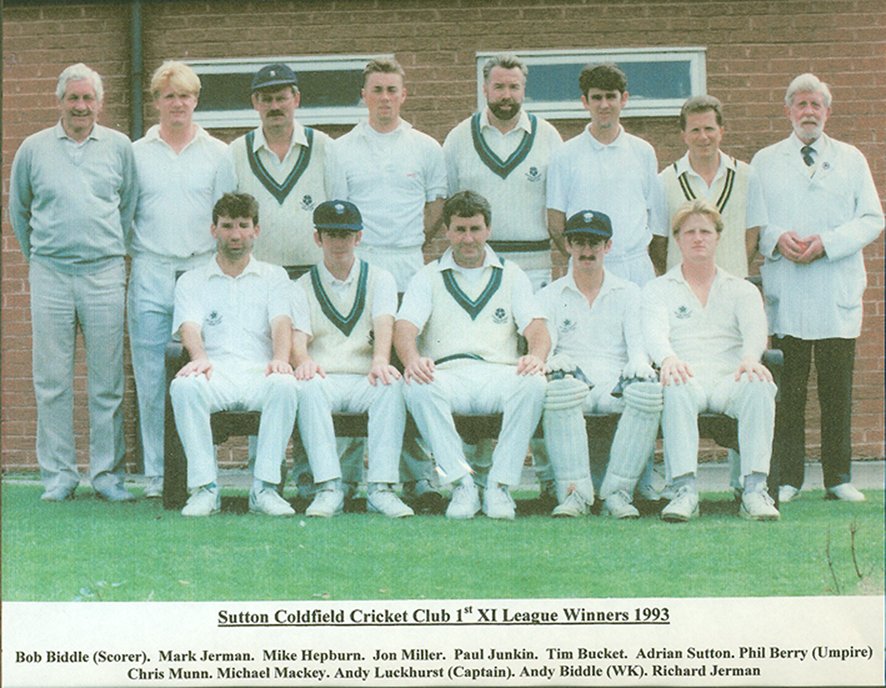
Champions at Last
1990-1999
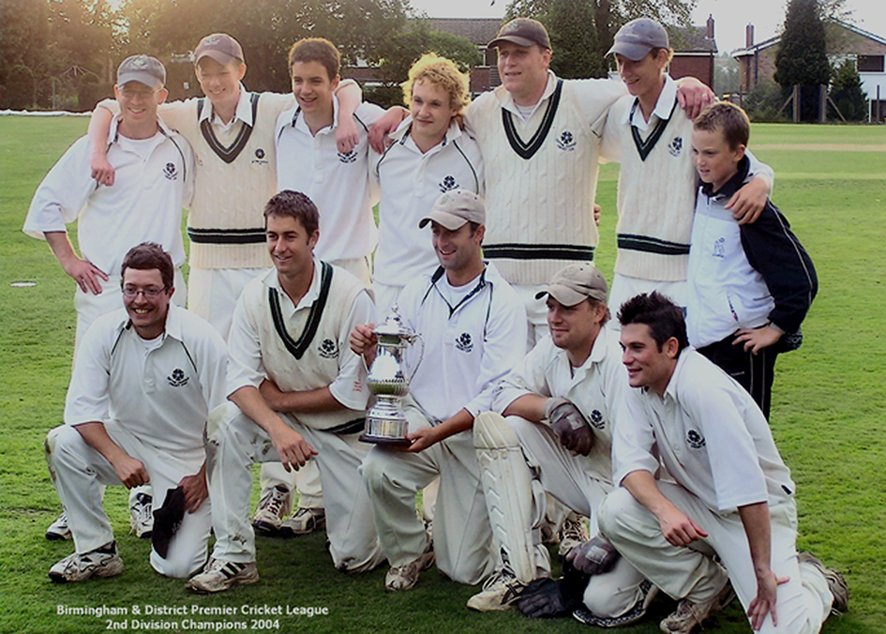
The New Millennium
2000-2009
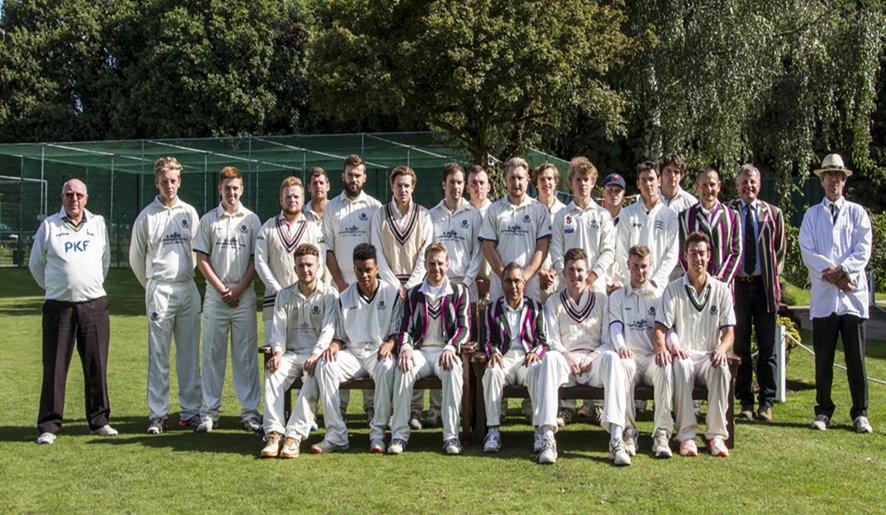
The Twenty-Tens
2010-2019
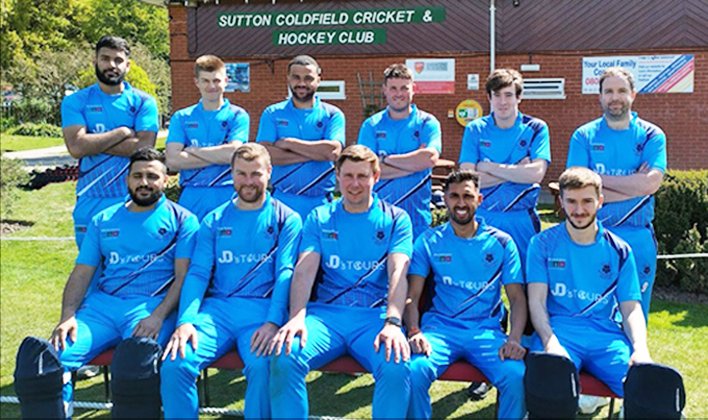
The Twenty-Twenties
2020-Present